
Key facts: Termite Inspection
- The US EPA suggests probing exposed wood for hollow spots and watching for swarms and mud tubes as ways to discover termites [1].
- Many owners only learn of an infestation when a swarm appears or damage turns up [1].
- Texas licenses people who apply pesticides in and around structures through the Department of Agriculture's Structural Pest Control Service [2].
- Eastern subterranean termites feed on cellulose, including structural wood, paper and cotton [3].
In this page
- 1Reasons Houston homeowners ask for an inspection
- 2What a termite inspection actually is
- 3Starting outside: the perimeter walk
- 4Inspection figure
- 5Inside: baseboards, frames and wet rooms
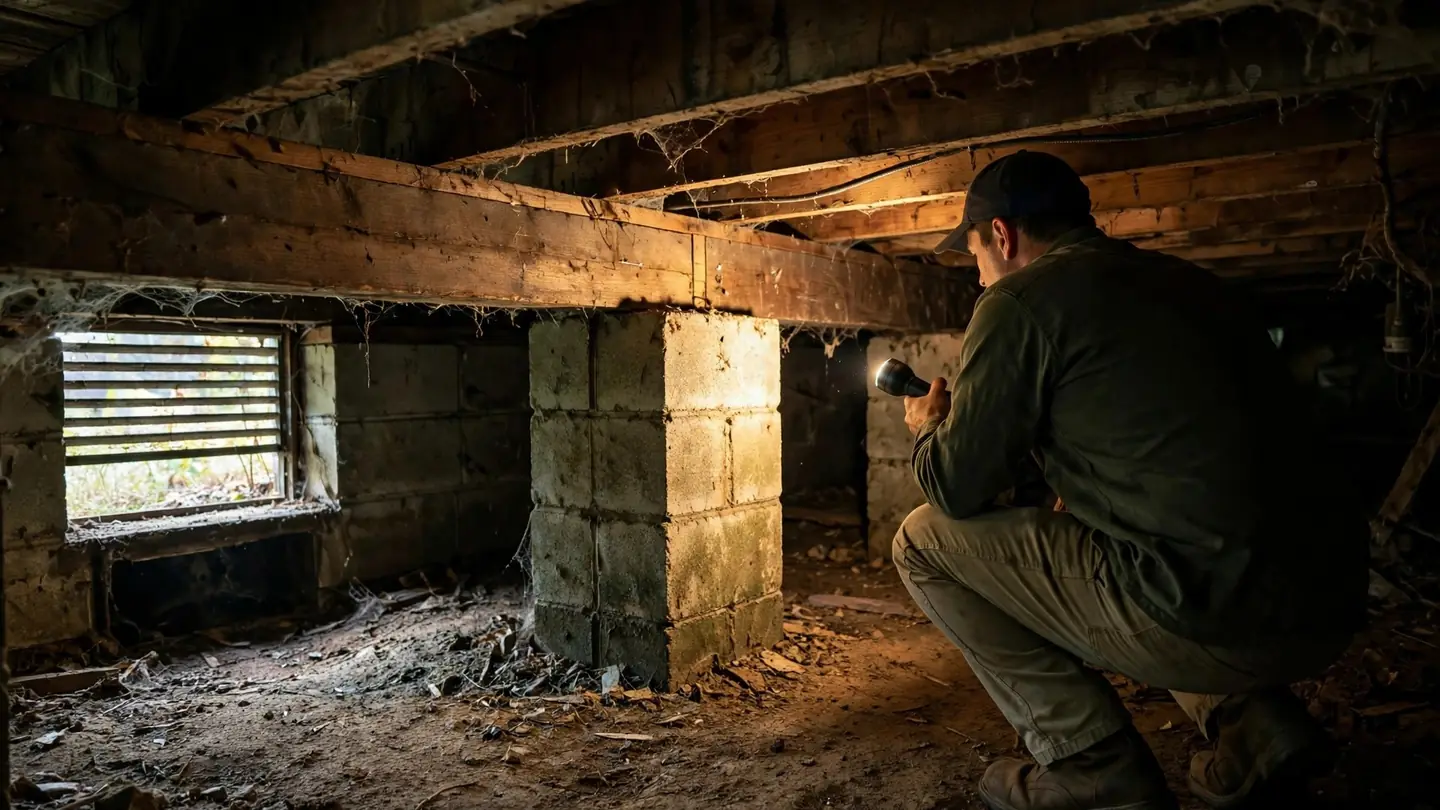
- 6Crawlspaces under pier-and-beam homes
- 7Why identifying the termite matters
- 8Conditions an inspector will flag
- 9Moisture, humidity and Houston termites
- 10Inspections for buying and selling
- 11A typical Houston termite inspection
- 12Limits of any inspection
- 13Signs and what they suggest
- 14How to prepare for an inspection
- 15What to do with the findings
- 16How often to have the house inspected
- 17Inspecting a Houston slab home
- 18Brick veneer and hidden tubes
- 19Garages, sheds and outbuildings
- 20Attics, roof leaks and Formosan nests
- 21Who performs termite inspections in Texas
- 22Understanding what the inspector tells you
- 23Previous treatments and records
- 24A first inspection after moving in
- 25Fixing what the inspector flags
- 26Questions to ask when booking an inspection
- 27Inspecting after a storm or flood
- 28Inspecting before and during a remodel
- 29Choosing when to inspect
- 30Pets, locks and access on inspection day
- 31Bring your notes to the inspection
- 32More questions Houston owners ask about inspections
- 33Questions about termite inspections in Houston
When to book
Reasons Houston homeowners ask for an inspection
An inspection makes sense whenever there is a sign of termites or a decision about the house is coming up.
Swarmers or wings indoors
A sign that a colony may be inside or very close.
Read moreMud tubes on the slab or piers
Termites travel in them between soil and wood.
Read moreBuying or selling
Many home sales include a wood destroying insect inspection.
Soft wood or blistered paint
Hidden damage may sit behind the surface.
Read more
What an inspection is
What a termite inspection actually is
A termite inspection is a careful visual and physical examination of a house for signs of termites, past damage and conditions that make an infestation likely. The inspector does not open walls or pull up flooring. Instead, they look at every accessible area, probe wood that seems suspect, take moisture readings and note anything that blocks a full view, such as stored boxes against a garage wall or carpet over a slab crack.
At the end, the inspector explains what they found: whether termites are active, which type they are, where damage appears and what conditions are contributing. If treatment is needed, they explain the options. For a home sale, they may complete a written report on a standard form.
Outside first
Starting outside: the perimeter walk
Inspectors usually begin outside, walking the full perimeter. On a slab house, they look along the exposed edge of the slab for mud tubes, cracks and places where soil, mulch or pavers rise above the top of the slab and hide the edge. On a pier-and-beam house, they look at the skirting, the piers and any wood that touches soil, such as steps, lattice or trim. [4]
They also note downspouts that dump water against the foundation, leaking hose bibs, air conditioner condensate lines dripping onto soil, firewood stacked against walls, wooden fences attached to the house and tree branches or roots close to the structure. Each of these makes termite activity more likely.
Inspection figure
Inside the house
Inside: baseboards, frames and wet rooms
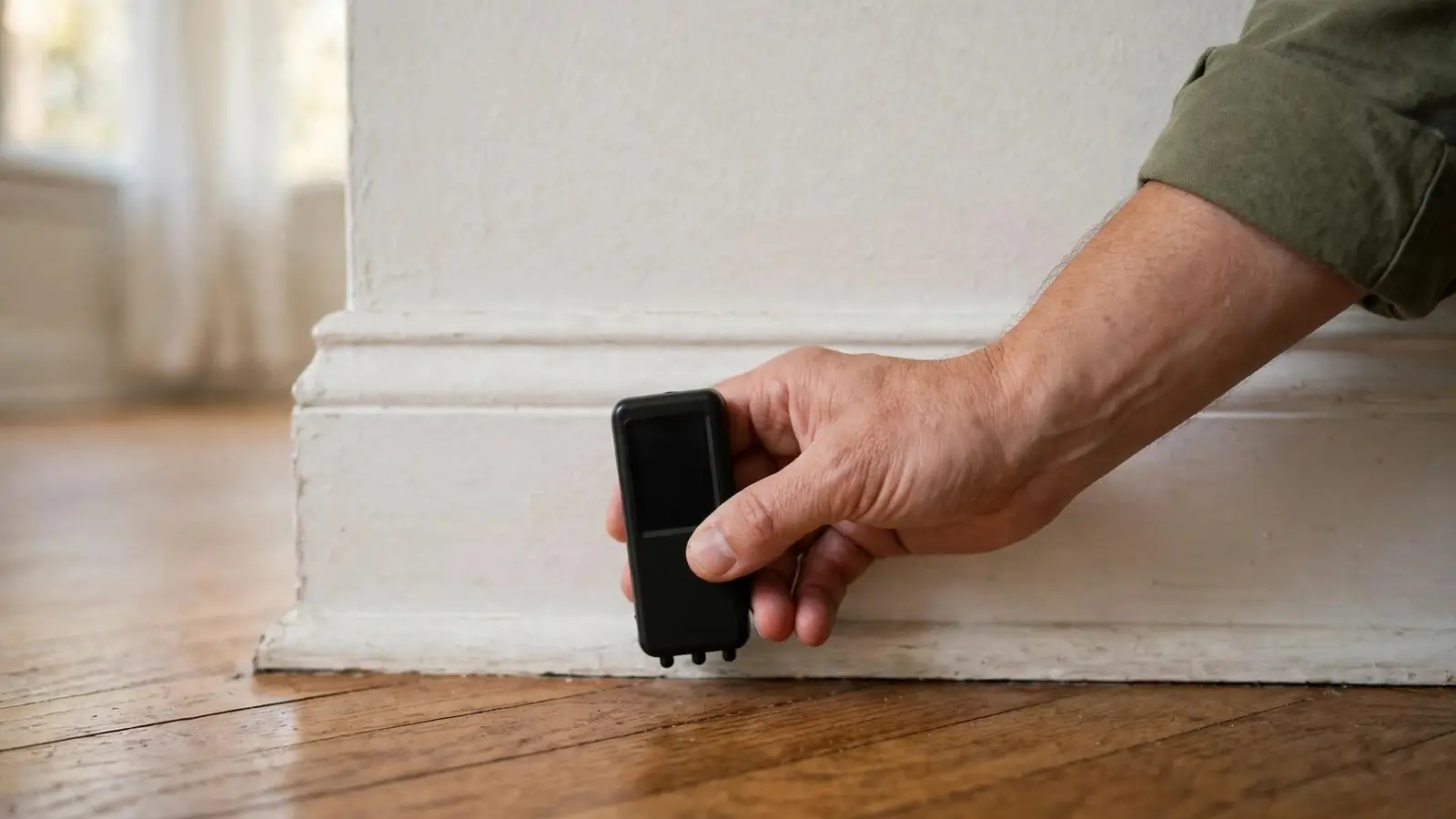
Inside, the inspector checks baseboards, door frames, window sills and trim, especially on exterior walls. They tap and probe wood that looks blistered, wavy or stained, listening for a hollow sound. They pay close attention to bathrooms, the kitchen and the laundry, where plumbing passes through the slab and leaks can keep wood damp. In the garage, they look at the bottom of walls, the door frame and expansion joints in the slab.
They may also look in closets on exterior walls, under sinks and in the attic. Formosan termites in particular can build carton nests inside walls or attics when they find a steady water source, so attic leaks and roof damage are worth noting.
Under raised houses
Crawlspaces under pier-and-beam homes
Many older Houston houses sit on piers with a crawlspace beneath. Inspectors who can safely enter crawl through with a light, examining sill plates, joists, girders, subfloor and piers. They look for mud tubes running up piers, galleries in wood, damp soil, standing water and wood debris left on the ground. Where the crawlspace is too low or blocked, they note that it could not be fully inspected.
Crawlspaces are where damage often hides longest, because few owners look there. An inspection is a good reason to see what condition the structure is in.
Identifying the termite
Why identifying the termite matters
Houston homes can face three main kinds of termites. Native subterranean termites live in soil and build mud tubes. Formosan termites are also subterranean but form much larger colonies and can nest above ground where moisture allows. Drywood termites live inside wood without soil contact and leave small, hard pellets. Each calls for a different approach, so the inspector identifies the type from the insects themselves, their wings, the shape of their tubes or the evidence they leave.
If swarmers were found, bringing a few in a sealed bag helps. Wings and bodies can confirm the type.
Conducive conditions
Conditions an inspector will flag
- Soil, mulch or pavers above the slab edge.
- Wood touching soil: steps, trim, fences, lattice.
- Leaking plumbing, hose bibs or condensate lines.
- Downspouts discharging against the foundation.
- Firewood, lumber or boxes stored against the house.
- Poor crawlspace ventilation or standing water.
- Tree limbs and roots against the structure.
Moisture matters
Moisture, humidity and Houston termites
Termites need moisture, and Houston has plenty. Subterranean termites lose water quickly and depend on moist soil and damp wood. That is why inspectors spend so much time on leaks, drainage and grading. A house with dry soil around it, gutters that carry water away and no plumbing leaks is far less inviting than one with a perpetually wet corner.
A moisture meter helps find damp wood that looks dry from the outside. High readings near a baseboard or door frame are a reason to look closer.
Reports for home sales
Inspections for buying and selling
Many Houston home sales include a wood destroying insect inspection. Lenders, buyers or sellers may ask for one. The inspector records any active infestation, evidence of past infestation, visible damage, prior treatment evidence and conditions that encourage termites. Buyers should read the report carefully and ask questions about anything marked, including areas that could not be inspected.
A report describes what was visible on the day of the inspection. It is not a guarantee that no termites are present in hidden areas.
What happens on the day
A typical Houston termite inspection
- 1
Arrival
The inspector asks what you have seen and where.
- 2
Exterior
The perimeter, slab edge or piers, and grading are checked.
- 3
Interior
Baseboards, frames, wet rooms and the garage are examined.
- 4
Crawlspace or attic
Accessible spaces are inspected with a light.
- 5
Findings
Activity, damage and conditions are explained.
- 6
Options
If treatment is needed, approaches are discussed.
Areas that cannot be seen
Limits of any inspection
No inspection sees through walls, under floors or inside slabs. Furniture, stored items, carpet, paneling, insulation and landscaping can all hide evidence. Inspectors note what they could not reach. If you know of an area with past problems, such as a bathroom that leaked years ago, mention it so they can look harder there.
What inspectors look for
Signs and what they suggest
| Finding | What it suggests |
|---|---|
| Mud tubes on slab or piers | Subterranean termites traveling from soil |
| Wings near windows or doors | A recent swarm nearby or inside |
| Small hard pellets | Drywood termites in the wood above |
| Hollow-sounding wood | Galleries beneath the surface |
| Blistered or wavy paint | Moisture or damage under the paint |
| Carton material in a wall | Possible Formosan nest |
Before the inspector arrives
How to prepare for an inspection
Clear access to the garage walls, under sinks and to the attic and crawlspace openings. Move stored boxes a foot or two away from walls where possible. If you collected swarmers or wings, have them ready. Make a short list of where you saw signs and when. Keep pets indoors or away from the inspector's path.
After the inspection
What to do with the findings
If no activity is found, the inspector may still recommend fixing conducive conditions, such as pulling mulch back or repairing a leak. If activity is found, ask which termite it is, how widespread it appears and what treatment approaches fit. Ask for the plan in writing, along with any warranty or monitoring terms and the license number of the business and applicator.
Regular inspections
How often to have the house inspected
In a humid climate with active termites, many owners have the house inspected regularly, especially if it has been treated before, has a crawlspace, or sits in an older neighborhood with big trees. Ask the professional what interval they suggest for your house.
Slab homes
Inspecting a Houston slab home
Most Houston houses built after the Second World War sit on concrete slabs, and many owners assume a slab keeps termites out. It does not. Concrete shrinks as it cures and moves as clay soils swell and dry, so most slabs develop hairline cracks over the years. Termites can squeeze through gaps far narrower than a pencil. They also follow plumbing pipes up through the slab, travel through expansion joints between the house slab and the garage or patio, and climb the exposed slab edge behind shrubs and mulch.
On a slab home, the inspector concentrates on those entry points. Inside, they look at bathrooms, where many homes have a bath trap, an open box of soil under the tub drain that was left so plumbers could connect the drain. Bath traps are a favorite termite entry. In the garage, they check the joint between the garage slab and the house slab and the bottom of the wall plate. Outside, they look for spots where soil or mulch hides the slab edge, because termites crossing there can reach the wall framing unseen.
Talk to a local contractor
Questions about termite inspection?
One call connects you with an independent termite treatment contractor who serves Houston.
Garages and outbuildings
Garages, sheds and outbuildings
Garages are often where termites first enter. Stored cardboard boxes, lumber and paper against walls give them food and cover, and the joint between garage and house slabs is an easy route. Detached garages, sheds and garage apartments are separate structures with their own risks. Ask the inspector to include outbuildings if you want them covered, and clear stored items away from walls before the visit.
Attics and Formosan nests
Attics, roof leaks and Formosan nests
Formosan termites can live above ground if they find a steady supply of water, such as a slow roof leak, a leaking air conditioning drain pan or a plumbing leak in a wall. They build carton nests, a papery material made from chewed wood, soil and saliva, inside walls, attics or hollow spaces. An inspector who checks the attic looks for carton, damp decking, stains around vents and mud on rafters. Formosan activity above ground changes the treatment plan, because a soil barrier alone may not reach a nest that no longer depends on the soil.
Who does the inspection
Who performs termite inspections in Texas
Termite inspections and treatments in Texas are part of structural pest control, regulated through the Texas Department of Agriculture's Structural Pest Control Service. [2] Ask for the business license and the individual's license number when you call. If the inspection is for a home sale, confirm that the inspector will complete the report your agent or lender needs. A general home inspector may note signs of termites, but a structural pest control professional identifies termites and recommends treatment.
Reading the findings
Understanding what the inspector tells you
Inspectors usually describe findings in four groups: active infestation, evidence of a past infestation, visible damage, and conducive conditions. Active means live termites or fresh, rebuilt tubes. Past evidence might be old, dry tubes or old damage that shows no current activity. Visible damage is described by location. Conducive conditions are things like wood touching soil, leaks and mulch against the slab. A house can have past evidence and damage without current activity, especially if it was treated before. Ask the inspector to point out each finding during the walk-through.
Previous treatments
Previous treatments and records
If the house has been treated before, find the paperwork: the date, the method, the product and any warranty or monitoring agreement. Some treatment warranties can be transferred to a new owner. Drill marks on patios and driveways near the foundation and bait stations in the yard are physical clues to past treatment. Tell the inspector what you know, because it affects how they interpret old tubes and damage.
Inspection for new owners
A first inspection after moving in
Moving into a Houston house is a good time for a baseline inspection, even if one was done for the sale. You can ask more questions, see the crawlspace or attic for yourself and learn which conditions to keep an eye on. Knowing where the bath traps, weep holes and expansion joints are makes it easier to watch for signs between professional visits.
Inspection and moisture fixes
Fixing what the inspector flags
Many inspection findings are things you can address without a pest professional. Pull mulch and soil down so a few inches of the slab edge or the brick ledge are visible. Repair dripping hose bibs and redirect air conditioner condensate lines away from the foundation. Add downspout extensions that carry roof water away from the house. Move firewood, lumber and stored boxes away from walls. Separate wooden fences from the house with a small gap or a metal connector. Each change makes the house less inviting and makes future tubes easier to spot.
Questions on the call
Questions to ask when booking an inspection
Ask whether the inspection includes the attic, crawlspace and outbuildings. Ask whether you will receive a written report and, for a sale, which form will be used. Ask how they identify the termite type and whether they will explain conducive conditions. Ask for the business and individual license numbers. Ask how long the inspection should take so you can plan access.
Inspections after storms
Inspecting after a storm or flood
Houston's tropical storms and flash floods change the picture around a house. Floodwater can wash away or bury treated soil, leave mud and debris against foundations, and soak wall framing for days. Roof damage lets rain into attics, giving Formosan termites the steady moisture they need to nest above ground. After a flood or significant roof leak, an inspection helps catch new activity early. Point out where water entered, how high it rose and what was replaced, so the inspector can look harder at those spots. If drywall, insulation or flooring was removed during flood repairs, that is a rare chance to see wall framing before it is covered again, and a good moment to ask for a look.
Inspections and remodeling
Inspecting before and during a remodel
A kitchen or bathroom remodel opens walls and floors that are normally hidden. Before new cabinets, tile or drywall go in, have a termite professional look at the exposed framing, bottom plates and subfloor. Damage found then can be treated and repaired while access is easy. Ask contractors to stop and call if they find galleries, mud in the wood or live termites. A remodel can also disturb treated soil, for example when a new plumbing line is trenched under the slab, so ask whether the area should be retreated afterward.
Seasonal timing
Choosing when to inspect
An inspection can be done at any time of year, but timing can help. In spring, swarms reveal colonies that might otherwise stay hidden, so many owners book inspections then. In summer and fall, termites remain active in Houston's heat, and inspections can find feeding activity. If you are buying a house, schedule the inspection early in the option period so there is time for follow-up. If you saw swarmers, book soon while the signs are fresh and you still have samples.
Pets and access
Pets, locks and access on inspection day
Inspectors need to walk the full perimeter, enter the garage, look under sinks and reach attic and crawlspace openings. Unlock side gates, secure dogs, and make sure someone can let the inspector into every area. If an area stays locked or blocked, it will be noted as not inspected, which matters especially for a sale report.
Bring your notes
Bring your notes to the inspection
Write down dates and places where you saw swarmers, tubes or damage, and show photos you took. These notes guide the inspector to the right spots quickly.
More inspection questions
More questions Houston owners ask about inspections
Can I be home during the inspection?
Yes, and it helps. You can point out what you found and see the findings yourself.
Does an inspection include the attic?
Ask when booking. Attics matter for Formosan activity and roof leaks.
What is a bath trap?
An open area of soil under a tub drain left during construction, a common termite entry in slab homes.
Will the inspector tell me what treatment to choose?
They explain options; the choice is yours after you understand the plan.
Inspection questions
Questions about termite inspections in Houston
How long does a termite inspection take?
It depends on the size and access of the house. Crawlspaces and large attics add time.
Will the inspector damage my walls?
No. Inspections are visual and use probing and moisture meters on accessible wood.
Can an inspection miss termites?
Yes, in hidden areas. Inspectors note what they could not see.
Do I need an inspection if I have not seen any signs?
Many Houston owners schedule them anyway, because termites often stay hidden until damage appears.
What should I do with swarmers I collected?
Keep them in a sealed bag or jar and give them to the inspector to identify.
Is a home sale inspection different?
It follows a standard reporting format but looks for the same evidence.
What should I tell the inspector on the call?
What you found, where, when, whether the house is on a slab or piers, and any past treatment.