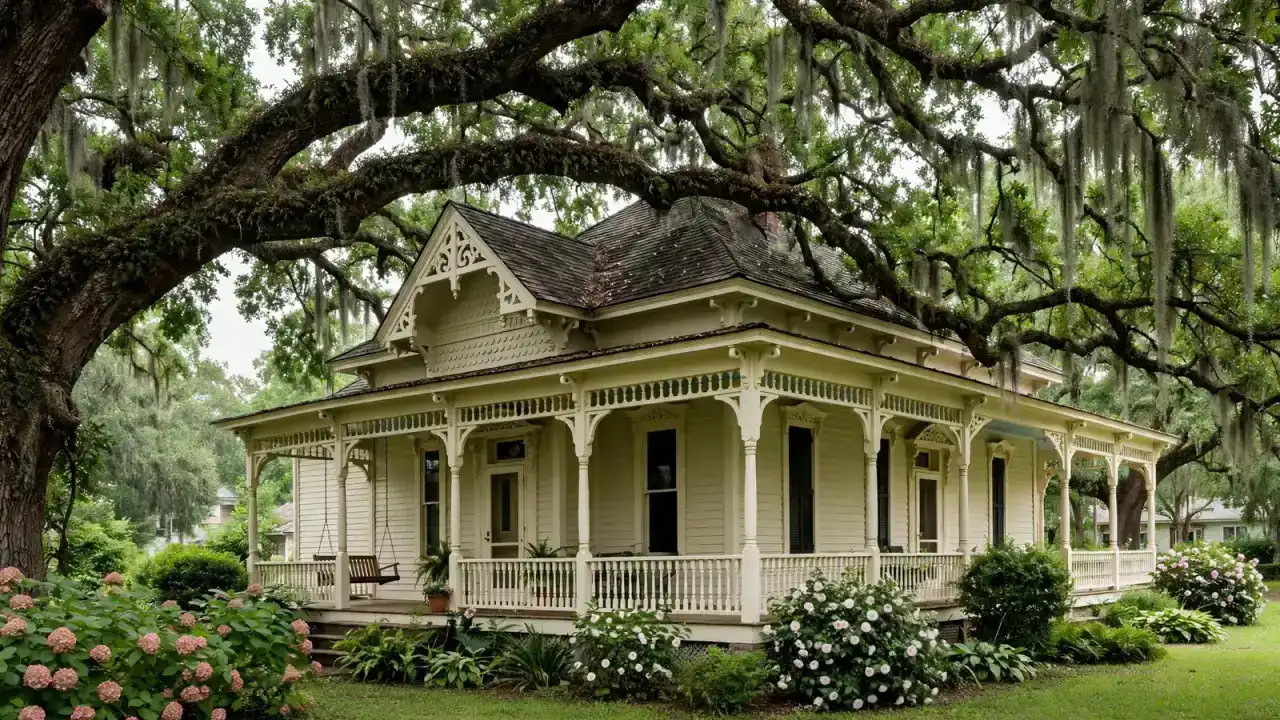
Key facts: Houston Heights
- Houston Heights was established in 1891 by Oscar Martin Carter's Omaha and South Texas Land Company [1].
- The Heights was a separate city until it agreed to be annexed by Houston around 1918 to 1919 [1].
- Pier-and-beam foundations raise wooden floors above a crawlspace [2].
- Formosan termites have been reported in Texas and other southern states [3].
In this page
- 1Houston Heights ZIP codes covered
- 2What Houston Heights homes are like
- 3What termite professionals see in the Heights
- 4Crawlspaces under Heights houses
- 5Heights figure
- 6Porches, steps, skirting and lattice
- 7Renovations, additions and hidden damage
- 8Big trees, shade and moisture
- 9Formosan swarms around porch lights
- 10Treatment options for Heights homes
- 11Planning a termite visit in the Heights
- 12Heights termite situations and typical responses
- 13Historic districts and repairs
- 14When the Heights was its own town
- 15Signs Heights owners notice first
- 16Keeping a Heights crawlspace dry
- 17Wooden piers, shims and old repairs
- 18Slab additions on raised houses
- 19Buying and selling in the Heights
- 20New construction in the Heights
- 21Trees, stumps and fallen limbs
- 22Preserving character while protecting the house
- 23What to do when swarmers fill a Heights porch or room
- 24What a treatment day looks like on a raised Heights house
- 25Choosing a termite professional for a Heights house
- 26Everyday habits that protect a Heights house
- 27Insurance and termite damage in older houses
- 28A year of termite awareness in the Heights
- 29Where termites go in a typical Heights bungalow
- 30Restoring a Heights house after termites
- 31Common beliefs about termites in the Heights
- 32First steps after buying a Heights house
- 33The boulevard and neighborhood canopy
- 34Townhomes among the bungalows
- 35Back-lot garages and studios
- 36More questions Heights owners ask
- 37Questions about termites in Houston Heights
Heights coverage
Houston Heights ZIP codes covered
Heights addresses in these ZIP codes are on the pest control network's list. Coverage changes from time to time, so confirm on the call.
- 77008: the core of the Heights, from the boulevard to the surrounding historic blocks.
- 77009: neighborhoods along the east side toward Woodland Heights.
Heights housing
What Houston Heights homes are like
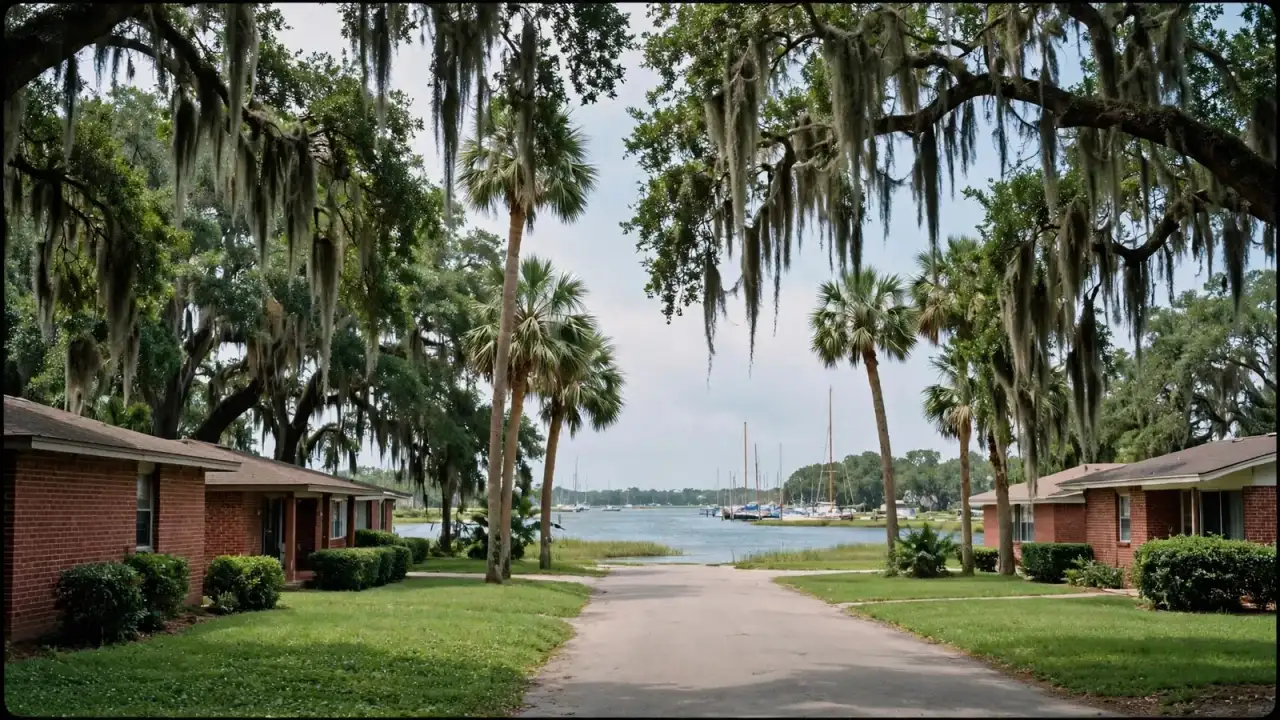
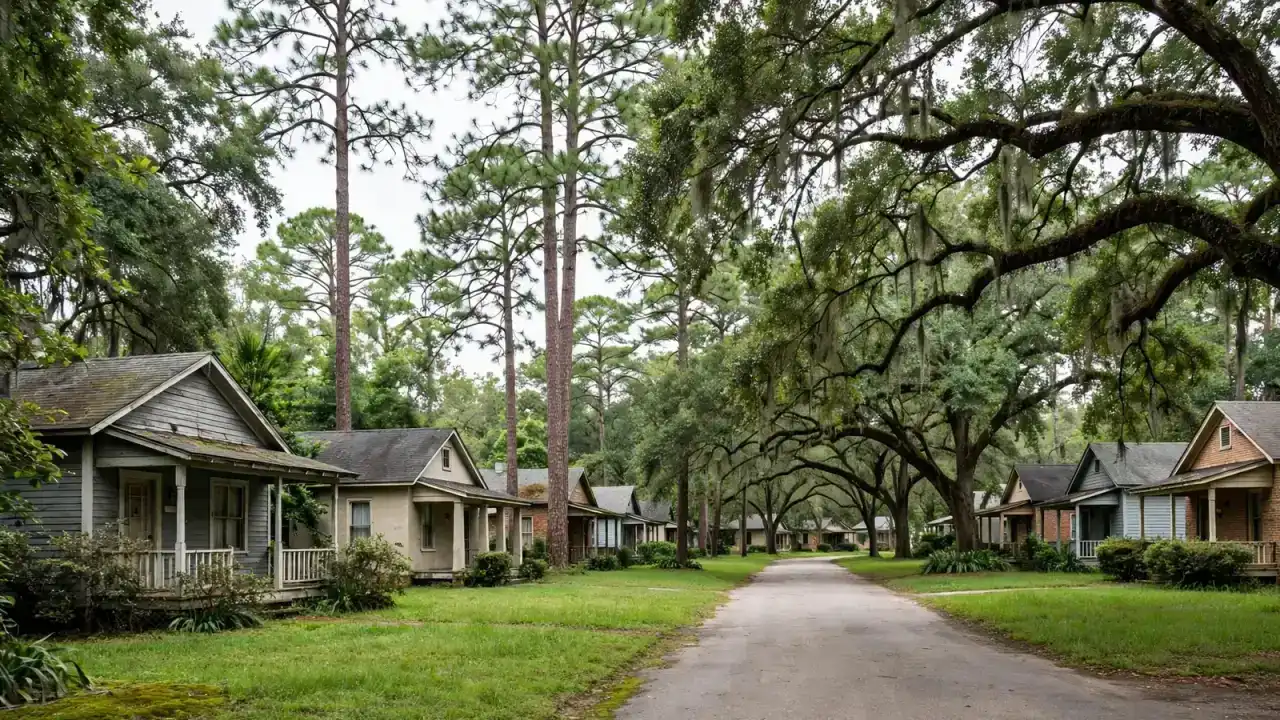
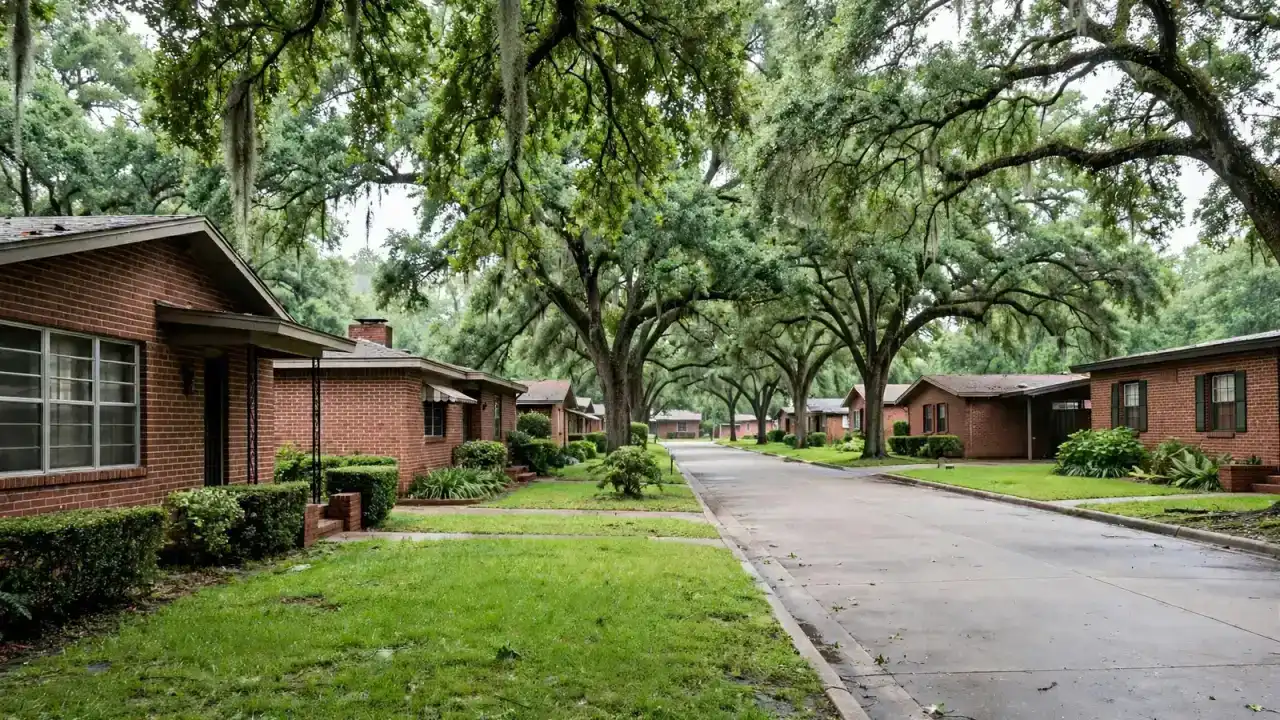
Oscar Martin Carter and his investors planned the Heights in 1891 as a separate town on higher ground northwest of downtown. They laid out lots, a central boulevard and streetcar lines, and builders filled them with Queen Anne Victorians, cottages and, later, Craftsman bungalows. The Heights governed itself until about 1918, when it joined Houston. Today, many original houses survive alongside new construction and additions.
Most older Heights homes are wood frame on pier-and-beam foundations. [2] Floors sit a couple of feet above the soil on wooden beams and joists that rest on brick, concrete or wood piers. Skirting around the base hides a crawlspace. Porches, steps and lattice are wood too.
Heights termite risks
What termite professionals see in the Heights
Common findings in Heights houses include these.
Damaged sills and joists
Wood closest to the soil gets attacked first.
Read moreTubes on piers
Subterranean termites climb piers to reach beams.
Read morePorch and step damage
Wood touching soil invites termites.
Read moreSpring swarms at night
Formosan swarmers gather at porch lights.
Read more
Crawlspaces
Crawlspaces under Heights houses
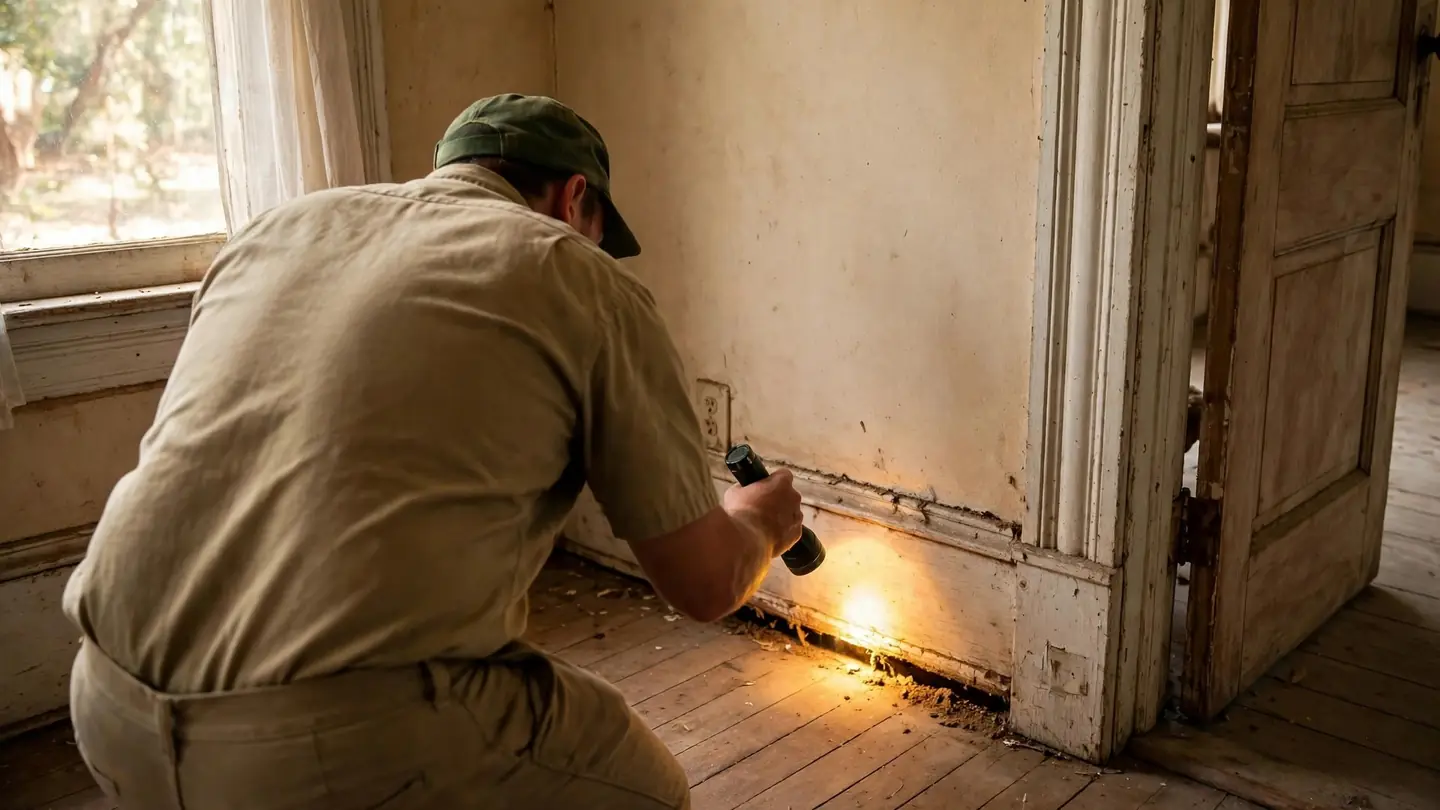
The crawlspace under a raised Heights house is where termites usually do their work. Subterranean termites travel from the soil up piers, either inside wooden piers or in mud tubes on brick and concrete ones, and into the sill beams and joists. Damp soil, poor ventilation, plumbing leaks and wood debris left from past repairs make a crawlspace even more attractive. An inspector who crawls the space with a light sees what owners rarely do.
Some Heights crawlspaces are low or blocked by ductwork and plumbing. Where access is limited, inspectors note what they could not reach.
Heights figure

Wood near soil
Porches, steps, skirting and lattice
Wooden porches, steps and lattice skirting often sit directly on or very near the soil. Termites can enter them without building tubes, then move into the house framing. Inspectors check porch posts, step stringers and skirting boards closely. Replacing soil-contact wood with concrete footings or treated materials during repairs reduces risk.
Live oaks and moisture
Big trees, shade and moisture
The Heights' live oaks and pecans shade lots and keep soil moist. Fallen branches, stumps and old roots can harbor colonies. Gutters clogged with leaves overflow against the house. Keeping gutters clear, removing stumps near the house and directing water away from the foundation all help.
Formosan swarms
Formosan swarms around porch lights
On warm, humid evenings from late spring into summer, Formosan termites swarm in large numbers and gather around lights. [3] Heights porches with lights on at dusk often collect them. Swarmers outside may come from a colony in a tree or a neighbor's house; swarmers inside point to a colony in your walls or under the floor.
Treatment options
Treatment options for Heights homes
For pier-and-beam houses, a liquid treatment usually involves trenching along the perimeter and around each pier in the crawlspace, plus treating soil near porches and steps. Bait stations can be set around the perimeter where trenching is difficult. Formosan activity may call for both. Damage to sills and joists is assessed after treatment and repaired by a carpenter.
Planning a Heights visit
Planning a termite visit in the Heights
- 1
Crawlspace access
Clear the hatch or opening in the skirting.
- 2
Porch and steps
Point out soft or damaged wood.
- 3
Swarm details
Note when and where swarmers appeared.
- 4
Renovation history
Share any additions or repairs.
- 5
Samples
Keep a few swarmers or wings in a bag.
Heights situations
Heights termite situations and typical responses
| Situation | Typical response |
|---|---|
| Tubes on piers in the crawlspace | Liquid treatment around piers |
| Damaged porch posts | Treat, then replace with soil-free footings |
| Swarmers inside | Inspection and treatment plan |
| Damage found during renovation | Assessment and treatment before closing walls |
| Formosan swarm outdoors | Inspection; baits often considered |
Heights historic districts
Historic districts and repairs
Parts of the Heights fall within city historic districts, which set rules for exterior changes. Termite treatment itself is not restricted, but replacing exterior wood such as porch columns, siding or trim may need to match historic character. Check with the city before major exterior repairs.
A town of its own
When the Heights was its own town
For its first quarter century, Houston Heights was a separate municipality with its own city hall, jail and fire station on Yale Street, and its own school system. Carter's company built streetcar lines to downtown and promoted the higher, drier ground as healthier than the bayou-side city. By the late 1910s, the small town struggled to fund its schools from local taxes and agreed to join Houston. That independent beginning explains why the Heights has such a concentrated collection of houses from the same few decades, built with the same kinds of wood and foundations, and why many of them share the same termite risks today.
Signs Heights owners notice
Signs Heights owners notice first
Heights owners most often notice termites in spring, when swarmers appear around porch lights in the evening or rise from a floor vent or baseboard inside. Others notice a soft spot on the porch, a step that gives slightly, or paint bubbling at the bottom of a door frame. In raised houses, a floor that dips near an exterior wall or a door that suddenly sticks can point to damage in the joists or sill below. Outside, look for mud tubes on brick or concrete piers visible through gaps in the skirting.
Crawlspace moisture
Keeping a Heights crawlspace dry
Moisture is the biggest factor under a raised house. Gutters that overflow, downspouts that empty against the skirting, and yards that slope toward the house all send water into the crawlspace. Leaking supply and drain lines under kitchens and baths add more. Blocked vents trap humid air. Termites thrive in damp soil and wet wood, so drying out the crawlspace helps any treatment work better. Simple fixes include downspout extensions, regrading soil away from the house, clearing vents and repairing leaks. Some owners add a vapor barrier on the soil, which should be planned with termite inspection access in mind.
Wooden piers and old repairs
Wooden piers, shims and old repairs
Some Heights houses still rest partly on wooden piers or have wooden shims and blocks added during past re-leveling. Wood in direct contact with soil is easy for termites to enter and hollow out without leaving tubes. Inspectors probe these supports carefully. Where wooden piers are found damaged, foundation contractors may replace them with concrete, which also removes a termite route. Ask the inspector to note the type and condition of piers.
Additions on slabs
Slab additions on raised houses
Many Heights homes have had rear additions, enclosed porches or new kitchens built on slabs and joined to the raised original. The joint between the two foundations is a common entry point. Soil may be piled against the original skirting where the addition meets it, and the slab may hide wood framing at its edge. Treatment plans should cover both foundation types and the junction carefully.
Heights home sales
Buying and selling in the Heights
Because so many Heights houses are a century old, buyers routinely ask for a termite inspection, and lenders may require one. Reports often show evidence of past activity, old damage, or previous treatment. Sellers who have records of treatment, warranties and repairs make the process easier. Buyers should ask what areas could not be inspected, especially low crawlspaces, enclosed porches and walls finished over original framing.
Talk to a local contractor
Questions about houston heights?
One call connects you with an independent termite treatment contractor who serves Houston.
New construction nearby
New construction in the Heights
New homes and townhomes continue to replace older houses in the Heights. Construction stirs up soil and can leave wood scraps on lots. New homes are usually pretreated before the slab is poured, but older houses next door may see colonies move after demolition. Owners near active construction may want an extra inspection afterward.
Heights trees and stumps
Trees, stumps and fallen limbs
The Heights' live oaks, pecans and crape myrtles drop limbs in storms. Leaving logs and stumps on the ground near the house feeds termite colonies. Remove fallen wood, grind stumps near the foundation, and store firewood away from the house and off the ground.
Preserving Heights character
Preserving character while protecting the house
Owners who value original features can protect them through prompt treatment and careful repair. Original porch columns, siding and trim can often be repaired rather than replaced when damage is limited. Choosing treated wood for hidden structural repairs, keeping exterior wood off the soil and maintaining paint all help original materials last.
During a swarm
What to do when swarmers fill a Heights porch or room
If swarmers pour out of a baseboard, floor vent or window frame inside your Heights house, close that room's door, turn off the lights in it and open a window or door to the outside if it is dark there, so the insects head toward it. Vacuum the rest. Save a handful in a jar or zip bag with the date. On the porch, switch off the light for the evening; Formosan swarmers will drift to the next lit house. Do not spray the floor vent or wall void with a store-bought aerosol, which tends to scatter the colony's foragers rather than reach the nest. Then call and say where they came from, because a floor vent in a raised Heights house points the inspector straight at the crawlspace below.
Treatment day in the Heights
What a treatment day looks like on a raised Heights house
On treatment day, the crew usually starts outside, digging a shallow trench along the skirting and around porch footings and steps, then works through the crawlspace from pier to pier. Expect them to be under the house for a good part of the day, with hoses running from a truck or a tank cart. If the house has a slab addition, they will drill the patio or driveway next to it and treat at the junction with the original house. Furniture inside usually stays put unless interior drilling is needed at a bathroom. Keep pets inside and away from the crawlspace opening until the crew has finished and the soil has dried.
Choosing who to call
Choosing a termite professional for a Heights house
For an older raised house, look for a professional who is willing to get into the crawlspace rather than inspecting only from the perimeter, who identifies the termite type, and who explains how they will reach every pier. Ask whether they have treated houses with slab additions and how they handle porch footings. Ask for their Texas license numbers and a written plan with a diagram. A careful plan for a century-old house is detailed, because the house is.
Heights prevention habits
Everyday habits that protect a Heights house
Small habits make a raised Heights house less inviting. Keep the bottom of the skirting clear of soil and mulch so you can see the piers and any tubes. Store firewood on a rack well away from the house. Clean gutters after the oaks drop leaves and pollen. Fix dripping hose bibs and keep sprinklers from soaking the skirting. Look under the house with a flashlight a couple of times a year from the access opening. Check porch columns and step stringers each spring when you sweep the porch. None of this replaces professional treatment, but it keeps conditions in your favor and helps you spot trouble early.
Insurance in the Heights
Insurance and termite damage in older houses
Standard homeowners policies usually exclude termite damage, treating it as a maintenance matter. In older Heights houses where damage can build up for years, that makes prevention and early detection important. Some treatment agreements include repair terms; read them carefully. When buying, factor termite history into your decision rather than counting on insurance to cover it.
Seasons in the Heights
A year of termite awareness in the Heights
Late winter and spring bring native swarms after warm rains. Late spring into early summer brings Formosan swarms at dusk around porch lights. Summer heat and storms keep soil moist under raised houses. Fall leaf drop clogs gutters. Winter is a good time to have crawlspace work done before swarm season. Tying inspections and maintenance to this rhythm helps owners stay ahead.
Heights bungalow anatomy
Where termites go in a typical Heights bungalow
Picture a typical Heights bungalow from the ground up. Brick or concrete piers stand on footings in the soil. A wooden sill beam runs across the tops of the piers, and floor joists span between the beams. Tongue-and-groove subfloor and original pine flooring sit on the joists. Walls rise from there, framed in wood and clad in wood siding, with a wide front porch on its own piers and steps resting on the ground. Termites coming up from the soil reach the piers first, then the sill beam, then the joists and subfloor, and from there they can climb into wall framing, window frames and door casings. On the porch, they go straight from the soil into the steps and column bases. Knowing this path tells you where to look and why inspectors spend so much time under the house.
Restoring after treatment
Restoring a Heights house after termites
Once termites are controlled, restoration can begin. Damaged sill beams can be replaced in sections while the house is supported on jacks. Joists can be sistered. Porch floors and steps can be rebuilt with treated framing and appropriate decking. Siding and trim can be patched with matching profiles. Working with a carpenter who knows older Heights houses keeps the character intact while making the structure sound.
Heights myths
Common beliefs about termites in the Heights
Some Heights owners believe old-growth pine is immune to termites. It is denser and often more durable than modern lumber, but termites still eat it, especially where moisture softens it. Others assume that a house standing for a hundred years must be fine. Many century-old houses carry old damage that was never repaired and new activity that has not yet shown. A third belief is that raised houses are safe because the floor is off the ground. Piers give termites a direct route upward, so raised houses still need inspection.
Moving into the Heights
First steps after buying a Heights house
After closing on a Heights house, find the crawlspace access, look under with a flashlight, and note the condition of piers and beams. Read the termite report from the sale and any treatment records the seller provided. Set a reminder to check porch columns and steps each spring, and plan an inspection before the first swarm season in your new home.
Heights boulevard trees
The boulevard and neighborhood canopy
Heights Boulevard's wide esplanade and the neighborhood's old trees give the area its look. Old trees shed limbs, and some decline with age. Dead wood in yards and along streets can feed colonies close to houses, so prompt cleanup after storms matters.
Heights townhomes
Townhomes among the bungalows
New townhome rows now sit between Heights bungalows. They are typically pretreated slab construction with shared walls, while the bungalow next door may have an untreated crawlspace full of old wood. Townhome owners should keep pretreatment records and watch for swarms coming from neighboring older houses.
Heights garage apartments
Back-lot garages and studios
Some Heights lots have old garages or studios at the back, reached from alleys. They tend to sit low, with wood near the soil. Include them in inspections.
More Heights questions
More questions Heights owners ask
My crawlspace is too low to enter. Can it still be treated?
Often, by trenching from the perimeter and treating through access points, though inspection may be limited.
Are Heights houses usually pretreated?
Original houses were not. Newer additions and rebuilds may have been.
Should I keep my porch light off in spring?
On humid evenings during swarm season, turning it off reduces swarmers around the door.
Can termites damage my original floors?
Yes, from below through joists and subfloor. A crawlspace inspection shows what is happening under them.
Heights termite questions
Questions about termites in Houston Heights
Are pier-and-beam houses more prone to termites?
Wood sits closer to the soil and crawlspaces can stay damp, so they need regular inspection.
Can termites be treated without tearing up the porch?
Usually. Soil around the porch is treated, and damaged wood is replaced afterward.
Why do swarmers gather on my porch at night?
Formosan termites swarm at dusk and are drawn to lights.
Should I inspect before buying a Heights house?
Many buyers do, given the age of the houses.
Does my historic district limit termite treatment?
No, but exterior wood repairs may need to follow district rules.
What should I tell the professional?
Foundation type, crawlspace access, renovation history and what you found.