
Key facts: Signs of termites
In this guide
- 1Termite signs: the short answer
- 2Common termite signs in Houston homes
- 3Signs figure
- 4Where to look in a Houston house
- 5Swarmers and discarded wings
- 6Hollow wood and probing
- 7Pellets and drywood termites
- 8Look-alikes and false alarms
- 9What to do if you find a sign
- 10Signs to watch for in a slab home
- 11Signs to watch for in a raised house
- 12Signs in the yard that matter
- 13Using sound and touch to find damage
- 14Why termite signs are easy to miss
- 15Keep a simple log of what you find
- 16Signs in furniture and stored items
- 17Questions about termite signs
The short answer
Termite signs: the short answer
The clearest signs are winged swarmers or their shed wings indoors, pencil-width mud tubes on the foundation or piers, wood that sounds hollow or gives way when probed, paint that blisters or bubbles over wood, and small hard pellets near wood. Any one of these is worth a professional inspection.
Signs to watch for
Common termite signs in Houston homes
- SwarmersWinged insects emerging indoors or around lights in spring.
- WingsPiles of identical wings on sills, floors or in spider webs.
- Mud tubesEarthen tunnels on the slab edge, piers or walls.
- Hollow woodWood that sounds papery or collapses when pressed.
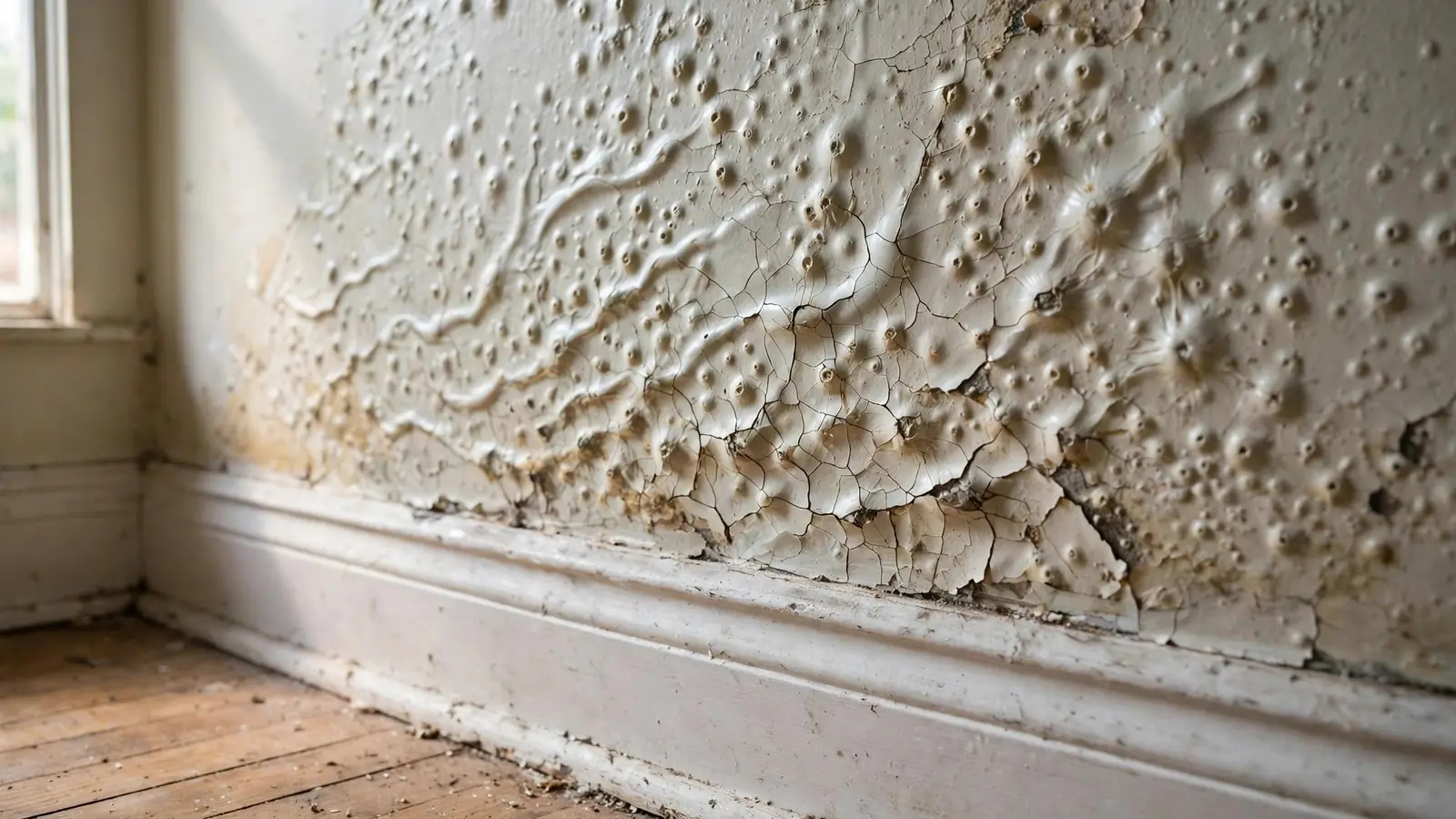
- Blistered paintBubbling or wavy paint on trim and walls.
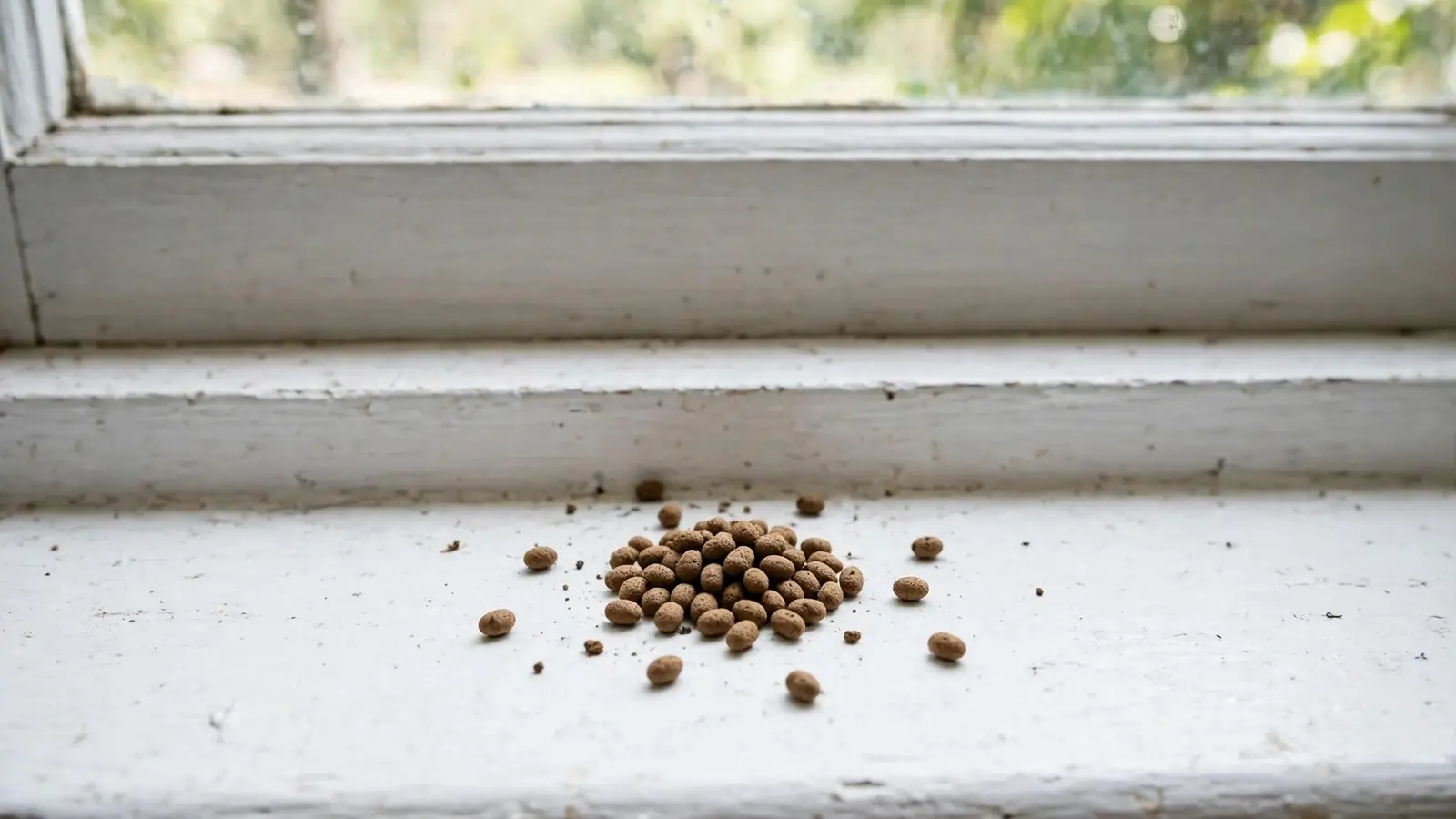
- PelletsSmall, hard, six-sided pellets below wood, a drywood sign.
- Sticking doors and windowsDamage and moisture can warp frames.
Signs figure
Where to look
Where to look in a Houston house
Walk the outside of the house and look along the slab edge or around the piers, especially near downspouts, hose bibs, air conditioner lines and anywhere mulch or soil touches the house. Inside, check baseboards and door frames on exterior walls, bathroom and kitchen areas where plumbing goes through the slab, window sills, and the garage where walls meet the slab. In a raised house, look under it if you can do so safely.
Swarmers and wings
Swarmers and discarded wings
In spring, mature colonies send out winged reproductives to start new colonies. Native subterranean termites usually swarm during the day, often after rain. Formosan termites swarm on warm, humid evenings and gather around lights. After a short flight, swarmers drop their wings. Finding piles of wings inside, especially near windows and doors, is a strong sign that a colony is in or close to the house.
Damaged wood
Hollow wood and probing
Termites eat wood from the inside and leave a thin surface. Tapping wood with a screwdriver handle can reveal a hollow sound. Gently pressing a screwdriver tip into suspect trim may break through into galleries packed with mud. Do this only on trim and accessible wood, not structural members, and stop if you find activity. Disturbing termites can scatter them.
Pellets and drywood termites
Pellets and drywood termites
Drywood termites live inside wood without soil contact. They push their droppings out through tiny holes, leaving small piles of hard pellets on sills, floors or furniture below. Pellets look like grains of sand or ground pepper and roll easily. This sign points to a different termite with a different treatment.
Not every sign is termites
Look-alikes and false alarms
Flying ants swarm too and are often mistaken for termites. Ants have elbowed antennae, pinched waists and front wings longer than the back. Rotten wood from leaks can look like termite damage. Old, empty mud tubes can remain after a past treatment. A professional confirms what you are seeing.
What to do
What to do if you find a sign
- 1
Do not disturb it further
Leave tubes and damaged wood in place.
- 2
Collect samples
Seal a few swarmers or wings in a bag.
- 3
Take photos
Note where and when you found them.
- 4
Fix obvious moisture
Stop leaks if you safely can.
- 5
Call
Arrange an inspection.
Call about this problem
Questions about signs of termites?
One call connects you with an independent termite treatment contractor who serves Houston.
Signs in slab homes
Signs to watch for in a slab home
In a slab house, look at baseboards along exterior walls and in bathrooms, especially near tubs and toilets. Drywall paper eaten by termites can show thin lines or ripples just above the baseboard. Door frames on exterior doors and the garage entry may soften at the bottom. In the garage, check the base of walls and the expansion joint between the garage and house slabs. Outside, walk the slab edge and look behind shrubs for tubes. Weep holes at the bottom of brick veneer can hide tubes running up into the wall cavity.
Signs in raised homes
Signs to watch for in a raised house
In a pier-and-beam house, the clearest signs are usually underneath. If you can safely look into the crawlspace with a flashlight, check piers for mud tubes, beams and joists for galleries, and the soil for wood debris. Inside, floors that feel soft or bouncy near exterior walls, gaps opening between floor and baseboard, and porches with soft boards are worth noting. Outside, look at steps, lattice and skirting boards where they touch the soil.
Signs around the yard
Signs in the yard that matter
Termites in the yard are not always a threat to the house, but they show colonies nearby. Look in old stumps, fallen branches, fence posts, landscape timbers and wood piles. If you find termites there, remove the wood if you can and keep an eye on the house. Wooden fences that touch the house are worth checking where they meet the wall.
Sound and touch
Using sound and touch to find damage
Tapping along baseboards and trim with the handle of a screwdriver is a quick way to find hollow spots. Healthy wood sounds solid; damaged wood sounds papery or dull. Pressing a fingernail into soft spots can reveal thin surfaces over galleries. Some owners notice faint clicking in walls, which soldier termites make by banging their heads when disturbed, though this is hard to hear.
Why signs stay hidden
Why termite signs are easy to miss
Termites avoid light and air. They stay inside soil, wood and tubes, and they leave the surface of wood intact. Damage can grow for months or years behind paint, drywall, carpet and stored boxes. That is why many Houston owners find termites only during a swarm, a remodel or a home sale inspection, and why regular inspections are common here.
Keep a log
Keep a simple log of what you find
A short note on your phone with the date, place and a photo each time you find a possible sign helps you and the professional see patterns, such as swarmers returning to the same window each spring.
Signs in furniture
Signs in furniture and stored items
Drywood termites can infest wooden furniture, picture frames and stored lumber. Pellets collecting beneath a dresser or bookcase point to them. Subterranean termites can reach cardboard boxes stored on a garage slab.
Signs questions
Questions about termite signs
Can termites be in my house without any signs?
Yes. Activity can stay hidden for a long time, which is why inspections matter.
Are winged insects in spring always termites?
No. Flying ants swarm too. Compare antennae, waist and wings.
Does a mud tube mean termites are active now?
Not necessarily. Break a small piece and see whether it is rebuilt.
What should I tell the professional?
What you found, where, when, and whether the house is on a slab or piers.