
Key facts: Termite swarm season
In this guide
- 1Swarm season: the short answer
- 2Why colonies send out swarmers
- 3Swarm figure
- 4Native and Formosan swarms compared
- 5Swarmers inside versus outside
- 6What to do during a swarm
- 7Flying ants or termites?
- 8Ant or termite figure
- 9After the swarm passes
- 10A rough Houston swarm calendar
- 11Evening swarms, porch lights and windows
- 12Where indoor swarmers come from
- 13Swarms during a home sale
- 14Swarms in the neighborhood
- 15How to save swarmers for identification
- 16When swarms return every spring
- 17Cleaning up after a swarm
- 18Weather that sets off a swarm
- 19Swarmers, pets and children
- 20Questions about termite swarms
The short answer
Swarm season: the short answer
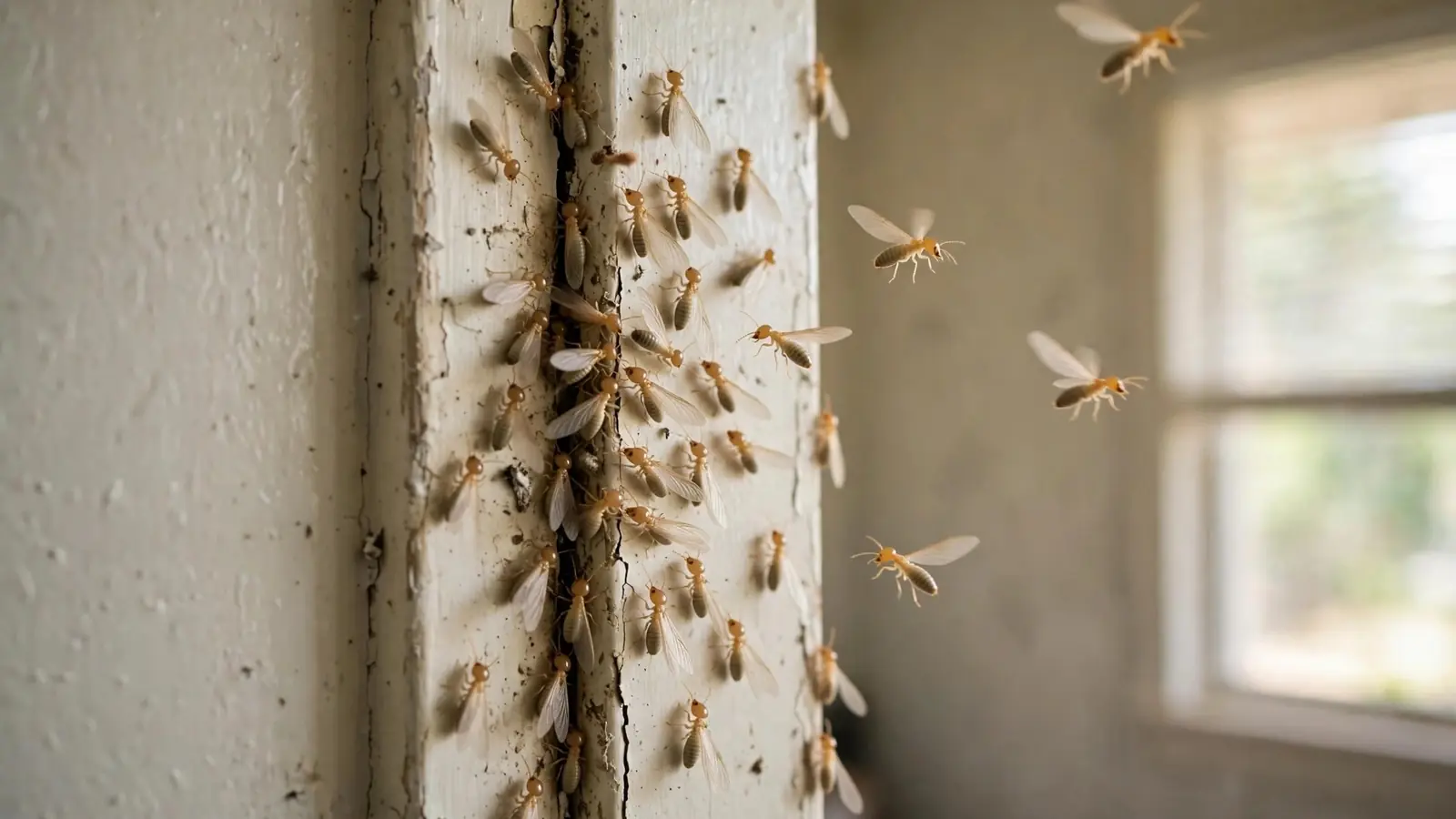
In Houston, termite swarms happen mostly in spring and early summer. Native subterranean termites tend to swarm on warm days after rain. Formosan termites swarm in large numbers on warm, humid evenings, often drawn to lights. [1] Swarmers indoors suggest a colony inside or very close to the house and call for an inspection.
Why termites swarm
Why colonies send out swarmers
A termite colony that has grown large enough produces winged reproductives, called alates. On the right day, often warm and humid after rain, they leave the colony together in a mating flight. After a brief flight, they drop their wings, pair up and try to start a new colony in soil or wood. Most fail, but the swarm itself shows that a mature colony is nearby.
Swarm figure
Native and Formosan swarms
Native and Formosan swarms compared
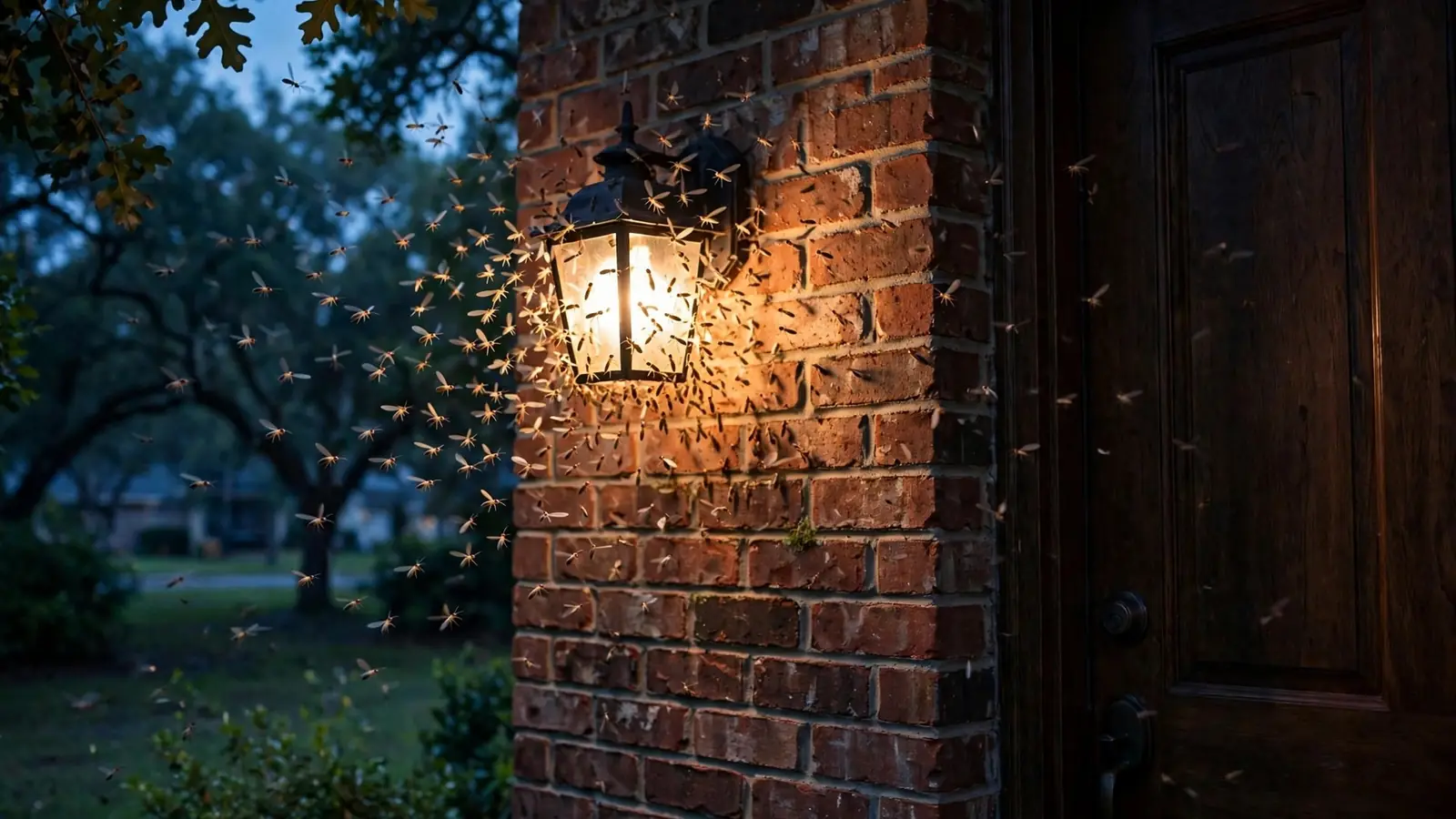
Native subterranean swarmers are small and dark with pale wings, and they usually fly during daylight. Formosan swarmers are larger, yellowish brown and fly at dusk, gathering by the thousands around porch lights, streetlights and lit windows. Drywood termites also swarm, often at night. The time of day, the size and color of the insects and the place they appear help a professional identify which you have.
Swarmers inside or outside
Swarmers inside versus outside
Swarmers seen outside around a light or tree may come from a colony in the yard or a neighbor's property. Swarmers emerging inside, from a wall, baseboard, window frame or slab crack, point strongly to a colony in or under the house. Indoor swarmers usually die quickly because they cannot reach soil, but their presence is a reason for an inspection.
What to do during a swarm
What to do during a swarm
- Turn off outdoor lights during evening swarms.
- Vacuum swarmers inside; they do not bite or sting.
- Save a few insects and wings in a sealed bag.
- Note where they emerged from.
- Avoid spraying wall voids with store insecticides.
Flying ants or termites
Flying ants or termites?
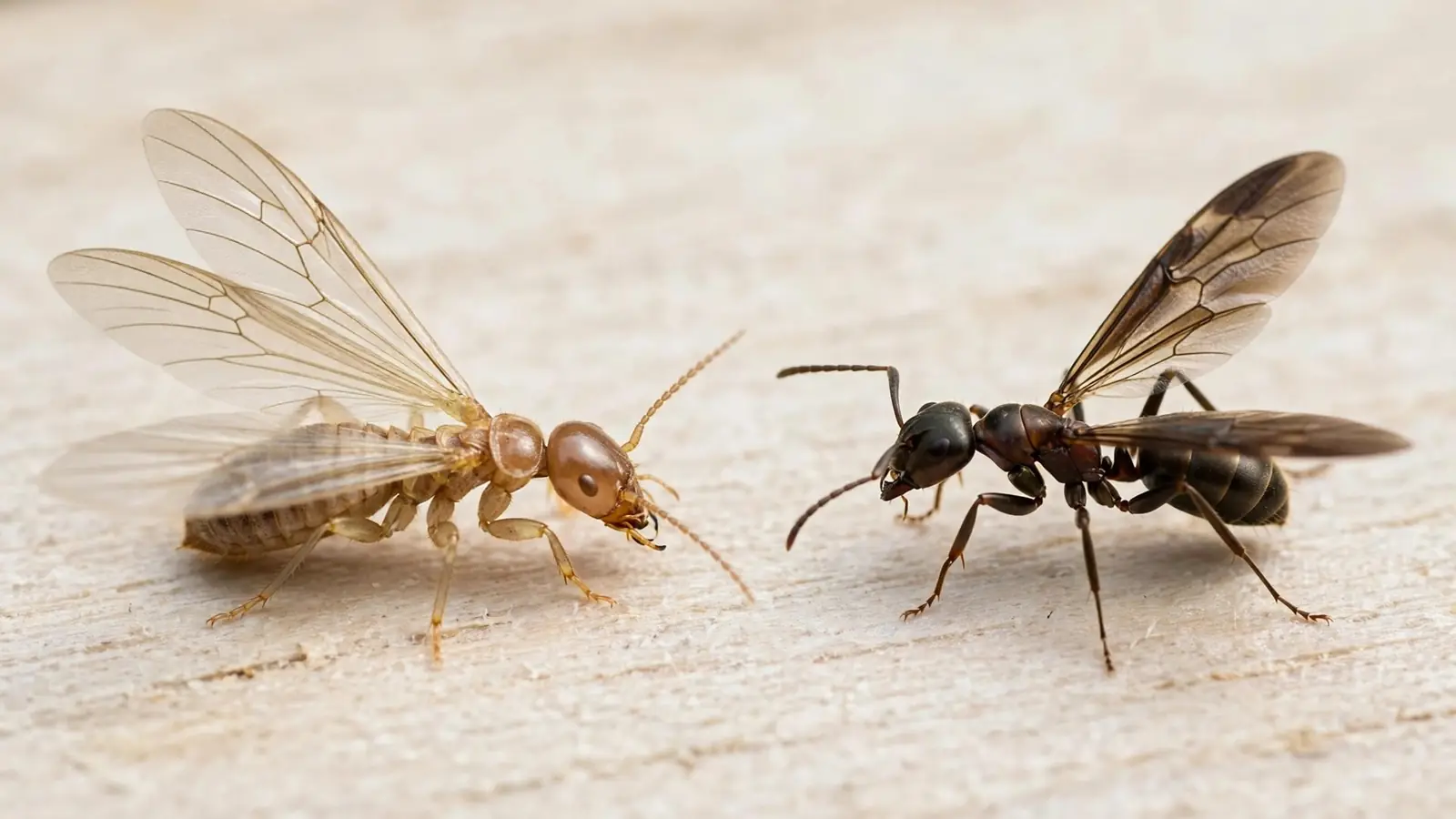
Flying ants also swarm in spring. Termite swarmers have straight antennae, a thick waist and two pairs of wings of equal length. Flying ants have elbowed antennae, a narrow pinched waist and front wings longer than the back. Wings are a good clue: termite wings are equal in size and break off easily.
Ant or termite figure
After the swarm
After the swarm passes
Once the swarm ends, the colony remains. Swarmers do not damage wood, but the colony they came from may be. An inspection shows whether termites are active in the structure and what treatment fits. Swarmers may appear again next season if the colony is not treated.
Houston swarm calendar
A rough Houston swarm calendar
Native subterranean termites usually swarm in late winter and spring, often on a warm day following rain, and typically during daylight. Formosan termites tend to swarm later, from late spring into early summer, on warm, still, humid evenings shortly after sunset. Drywood termites may swarm in late summer or fall, often at night. Weather shifts these windows from year to year, so treat them as a guide rather than a schedule.
Evening swarms and lights
Evening swarms, porch lights and windows
Formosan swarmers are strongly attracted to light. On swarm evenings, porch lights, streetlights and lit windows can be covered with thousands of insects. Turning off outdoor lights and closing blinds during the first hours after dusk reduces how many gather around and get inside. Swarmers that get in will die without soil and water, but their wings and bodies can pile up on sills and floors.
Call about this problem
Questions about termite swarm season?
One call connects you with an independent termite treatment contractor who serves Houston.
Where indoor swarmers come from
Where indoor swarmers come from
Swarmers emerging inside usually come from a crack in a slab, a gap around plumbing, a baseboard, a window or door frame, or a wall void. Sometimes they appear from light fixtures or ceiling openings, especially with Formosan nests in attics or walls fed by leaks. Note exactly where they came out; that spot often leads the inspector to the colony's entry point.
Swarms and home sales
Swarms during a home sale
If you see swarmers while buying or selling a house, tell your agent and arrange an inspection. Swarmers inside are evidence that should be disclosed and evaluated. Sellers who have already treated should share records. Buyers should ask whether the swarm area was included in any treatment.
Swarms and neighbors
Swarms in the neighborhood
If neighbors report swarms the same evening, colonies are active in the area. That does not mean your house is infested, but it is a good reason to check your own perimeter and consider an inspection, especially in older neighborhoods with large trees.
Keeping samples
How to save swarmers for identification
Use a piece of clear tape, a sealed sandwich bag or a small jar with a lid. Collect a few whole insects and some wings. Rubbing alcohol in the jar keeps them intact. Label the date and where you found them. Bodies and wings help a professional tell native subterranean, Formosan and drywood termites apart, and separate termites from flying ants.
Swarms year after year
When swarms return every spring
Swarmers appearing in the same place year after year point to a mature colony that has not been treated or that has returned. Even if the swarms seem small, the colony behind them may be feeding steadily. An inspection breaks the cycle of sweeping up wings each spring and hoping for the best.
After a swarm cleanup
Cleaning up after a swarm
Vacuum swarmers and wings, but save a few first for identification. Check window sills, light fixtures and floors near doors. Wipe sills afterward so you can tell whether new wings appear in coming days, which would suggest swarmers are still emerging from inside.
Swarms and weather
Weather that sets off a swarm
Swarms usually follow a run of warm days, often right after rain when the soil is soft and the air is humid and still. Strong wind, cold fronts and dry spells tend to delay them. That is why a single muggy evening after a spring storm can bring swarmers out across a whole neighborhood at once.
Swarmers and pets
Swarmers, pets and children
Swarmers do not bite, sting or carry disease. Pets may eat a few without harm. Vacuuming is the simplest way to clear them.
Swarm questions
Questions about termite swarms
Do termite swarmers damage wood?
No. The colony's workers do the damage.
Will swarmers start a colony in my house?
Most fail, but some succeed where soil and moisture are available.
Why do swarmers gather at my porch light?
Formosan swarmers fly at dusk and are drawn to lights.
What should I tell the professional?
When the swarm happened, where swarmers emerged, and whether you saved samples.