
Key facts: Bait Station Systems
- The US EPA lists termite baits among approved treatment approaches [1].
- Bait systems use slow-acting active ingredients that termites share through the colony [2].
- Formosan termite colonies are large and can consume wood rapidly [3].
- Texas licenses people who apply pesticides in and around structures through the Department of Agriculture [4].
In this page
- 1When bait stations are often recommended
- 2How termite bait stations work
- 3Where stations go around a Houston house
- 4Bait figure
- 5Why monitoring visits matter
- 6How long baiting takes
- 7Baits and Formosan termites
- 8Living with bait stations in the yard
- 9What a bait installation looks like
- 10Bait stations at a glance
- 11Combining baits with liquid treatment
- 12Baits as ongoing protection
- 13Bait stations or liquid barrier?
- 14Monitoring stations and active bait
- 15How many stations and how far apart
- 16How Houston seasons affect bait stations
- 17Above-ground stations inside the house
- 18Records from each monitoring visit
- 19When stations are damaged or moved
- 20Questions to ask about a bait system
- 21Neighbors, colonies and property lines
- 22Bait stations on concrete-heavy lots
- 23Bait stations in landscaped beds
- 24Baits for households with special concerns
- 25How you know the colony is gone
- 26Switching or adding treatments later
- 27Bait stations around new construction
- 28Bait stations in Houston's clay soils
- 29Bait systems on large and wooded lots
- 30Bait stations at townhomes
- 31Bait stations when selling a house
- 32Why baits do not reach drywood termites
- 33Setting expectations with a bait program
- 34Records to keep for a bait program
- 35Bait stations during swarm season
- 36Bait stations around pools and patios
- 37What happens if you end bait service
- 38Choosing a professional for a bait program
- 39Stations around sheds and garages
- 40Heavy rain and flooded stations
- 41Lawn care around bait stations
- 42Monitoring as an early warning system
- 43Dogs that dig near stations
- 44More questions about bait stations
- 45Questions about termite bait stations
When baits fit
When bait stations are often recommended
Baits suit many Houston houses, especially where drilling and trenching are hard.
Slab homes surrounded by concrete
Fewer holes through patios and drives.
Read moreFormosan activity
Colony-level control for large colonies.
Read moreLandscaped yards
Less disturbance to beds and plantings.
Read moreWells, ponds or gardens near the house
Less product in the soil.
Read more
How baits work
How termite bait stations work
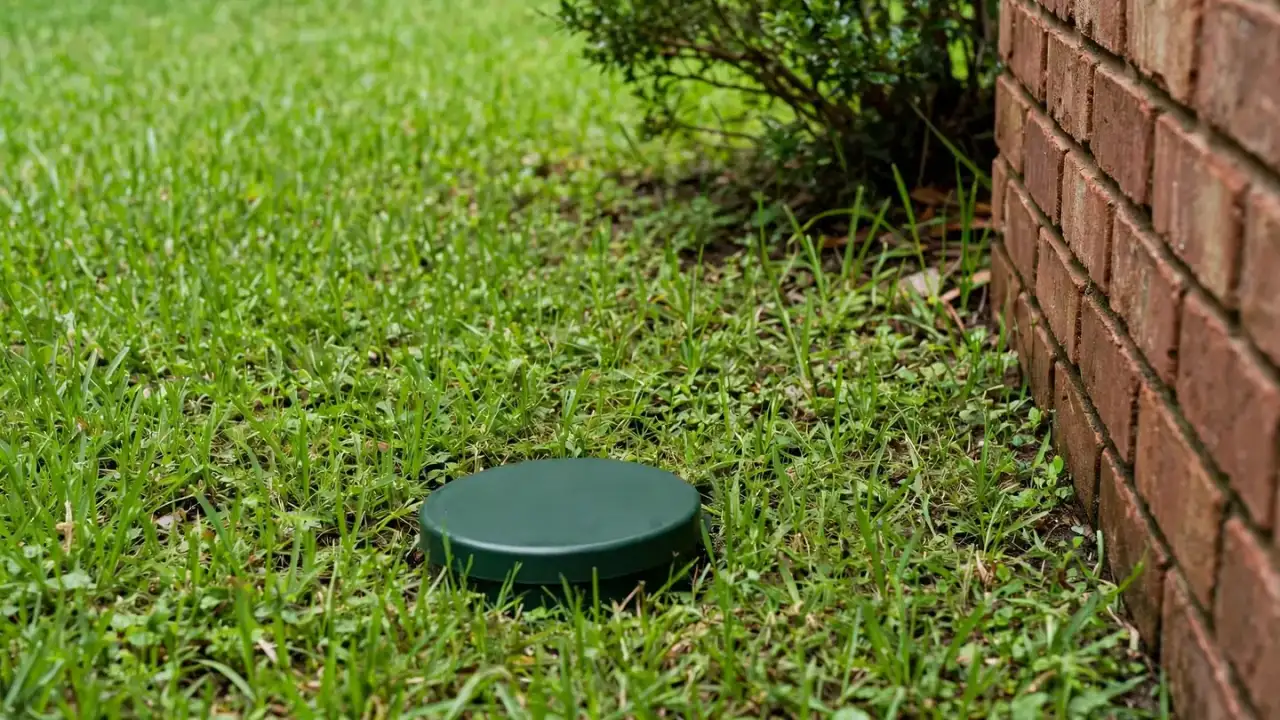
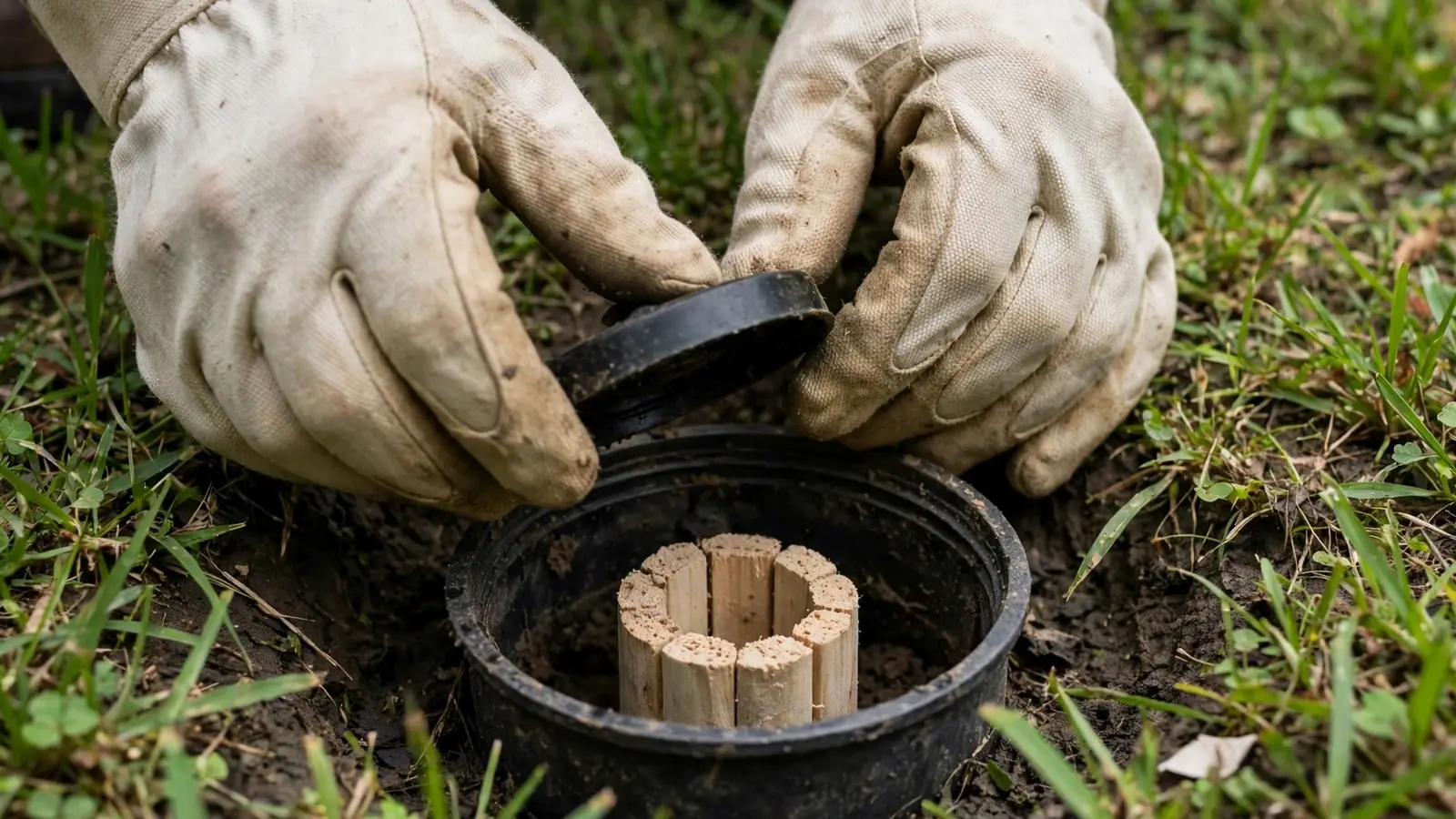
A bait station is a plastic housing set into the soil so its top sits flush with the ground. Inside is wood or a cellulose material that termites find attractive. Worker termites foraging through the soil find the station and feed. Depending on the system, the bait either contains an active ingredient from the start or is swapped for one once termites are detected.
The active ingredients in most termite baits are slow-acting growth regulators that disrupt molting. Termites share food through trophallaxis, passing it mouth to mouth, so bait spreads through the colony. [2] Workers that cannot molt die, and over time the colony declines. Because it acts slowly, foragers keep returning to the bait instead of avoiding it.
Placement
Where stations go around a Houston house
Stations are placed in the soil around the perimeter at intervals, usually a few feet out from the foundation and closer together near known activity, moist areas and places termites are likely to forage, such as near downspouts, air conditioning units and wooden fences. Where concrete surrounds the house, stations may sit in the nearest soil or in holes cored through the pavement. Some systems also offer above-ground stations mounted over active mud tubes or damaged wood inside the house.
Bait figure
Monitoring
Why monitoring visits matter
Baits only work when termites find them and the bait is kept stocked. Technicians visit on a schedule to open each station, check for termites or feeding, replace consumed bait and note activity. Stations can also fill with ants, soil or water, which the technician clears. If monitoring lapses, termites may eat through the bait and move on, or stations may sit empty while termites feed elsewhere.
Ask how often the professional will visit, how findings are recorded and how you will be told about activity.
Timeline
How long baiting takes
Because baits work through the colony, results take longer than a liquid treatment. Termites must find stations, feed and share the bait before numbers drop. Depending on the season, colony size and how quickly termites find the stations, elimination can take months. Swarmers may still appear during this time. Patience and steady monitoring are part of the approach.
Formosan colonies
Baits and Formosan termites
Formosan termite colonies are very large and can travel long distances underground. [3] Baits target the colony itself, which is one reason they are often used against Formosans. Where Formosans have built a nest inside a wall or attic, fed by a leak, above-ground bait stations placed on active tubes inside the house may help, along with fixing the moisture source.
Living with stations
Living with bait stations in the yard
Stations sit flush with the soil and are usually unobtrusive in lawns and beds. Lawn mowers pass over them. Avoid moving or covering stations, piling mulch over them or digging nearby. Tell the professional before major landscaping, so stations can be relocated if needed. Children and pets generally cannot open stations, which require a tool.
Installation day
What a bait installation looks like
- 1
Inspection
The house is inspected and activity mapped.
- 2
Plan
Station locations are chosen around the perimeter.
- 3
Install
Holes are dug or cored and stations set flush.
- 4
Above-ground stations
Placed over active tubes inside if needed.
- 5
Records
Station locations are mapped for monitoring.
- 6
Monitoring begins
Visits follow on a schedule.
Bait compared
Bait stations at a glance
| Factor | Bait stations |
|---|---|
| Drilling and trenching | Minimal |
| Product in the soil | Contained in stations |
| Speed | Slower; works through the colony |
| Monitoring | Required on a schedule |
| Formosan colonies | Often used |
| Drywood termites | Not effective |
Combined approaches
Combining baits with liquid treatment
Some professionals combine baits with a liquid treatment, especially for heavy Formosan activity or where part of the perimeter is hard to treat. Liquid treatment can protect key areas quickly while baits work on the colony. The plan depends on the house and findings.
Ongoing protection
Baits as ongoing protection
After a colony is eliminated, many owners keep stations in place and monitored, so new colonies are detected early. In a city with active termites year after year, ongoing monitoring is a common choice. Ask about the terms for continuing service before you agree.
Choosing liquid or baits
Bait stations or liquid barrier?
Baits disturb less and target the colony, but take time and need monitoring. Liquid treatments act faster and do not require ongoing visits for the treatment itself, but involve trenching and drilling. The liquid versus bait stations guide explains the trade-offs.
Monitoring stations and active bait
Monitoring stations and active bait
Some systems start with monitoring stations containing untreated wood or cellulose. When technicians find termites feeding, they swap in an active bait cartridge, so termites already feeding carry it home. Other systems use active bait from the beginning, so any termite that feeds picks it up right away. Each approach has advantages: monitoring-first systems use less product, while active-from-the-start systems can begin working sooner. The professional explains which system they use and why.
Station spacing
How many stations and how far apart
Station spacing depends on the system, the house and where activity is found. Stations are typically placed around the full perimeter at regular intervals, with extra stations near known activity, moisture problems and likely foraging routes. Large houses or properties with outbuildings need more stations. Hard surfaces next to the house may push stations farther out or require coring through concrete.
Seasonal activity
How Houston seasons affect bait stations
Termites forage most actively in warm, moist weather, which in Houston covers much of the year. In cooler months or during dry spells, they may forage deeper or less often, and stations may see less feeding. Monitoring visits continue through the year so stations are ready when activity picks up. Spring and early summer, around swarm season, are often when stations first show hits.
Above-ground stations
Above-ground stations inside the house
When termites are active inside, for example in a mud tube on a garage wall or in damaged trim, some systems use an above-ground station mounted over the active area. Termites in the tube are guided into the station, feed on the bait and carry it back to the colony. Above-ground stations are useful when you want to start working on a colony right away, without waiting for in-ground stations to be found.
Records and reports
Records from each monitoring visit
After each visit, the professional should record which stations had activity, what was replaced and any other observations. Some provide a map and a written report. Keep these records with your house papers. They show the history of activity and help if you sell the house or change providers.
When stations are disturbed
When stations are damaged or moved
Lawn equipment, construction, flooding and curious animals can damage or move stations. If a station is cracked, missing or flooded, tell the professional so it can be replaced. Gaps in coverage reduce effectiveness. Before major landscaping or construction, plan with the professional so stations can be relocated rather than lost.
Questions to ask
Questions to ask about a bait system
Which system and active ingredient do you use? Do stations start with active bait or monitoring material? How many stations, and where? How often will you visit, and what happens if termites are found? How will you report results? What happens if I want to stop service? Is there a warranty, and does it cover repairs or retreatment? Ask for the answers in writing.
Bait and neighbors
Neighbors, colonies and property lines
Termite colonies do not stop at property lines. A colony feeding at your stations may also be foraging at your neighbor's house. Eliminating it helps both, but new colonies can arrive from elsewhere. Ongoing monitoring catches new activity early. In townhome communities, coordinating with neighbors or the association improves coverage.
Bait and slab houses
Bait stations on concrete-heavy lots
Many Houston lots have driveways, patios, walkways and pool decks running right up to the house. Drilling through all of them for a liquid treatment means many holes and patches. Bait stations can sit in the nearest soil, in planting beds or in small cores through concrete, reaching foraging termites without treating under every slab. This is a common reason Houston owners choose baits.
Bait and landscaped beds
Bait stations in landscaped beds
Owners with established beds of shrubs, perennials and trees along the foundation may not want trenching that disturbs roots. Stations fit within beds with minimal disturbance. Keep mulch thin around stations so technicians can find and open them, and avoid planting directly on top.
Talk to a local contractor
Questions about bait station systems?
One call connects you with an independent termite treatment contractor who serves Houston.
Bait and households
Baits for households with special concerns
Because bait is contained in stations rather than spread through the soil, some households prefer it: those with wells, ponds, vegetable gardens along the house, or concerns about pesticide exposure. Stations are locked and need a tool to open. Ask the professional about the bait material and any precautions.
Bait elimination signs
How you know the colony is gone
Professionals judge colony elimination by station activity: termites stop appearing, bait is no longer consumed and above-ground activity ceases. Swarms may stop the following season. Because new colonies can arrive, stations are usually kept in place and monitored. Ask how the professional defines success and how they will report it.
Switching from baits
Switching or adding treatments later
If baiting does not bring results as expected, or if activity is urgent in one area, the professional may add a liquid treatment or above-ground stations. Plans can be adjusted as monitoring reveals more. Ask how changes are handled under your service terms.
Bait and new construction
Bait stations around new construction
New homes are usually pretreated with soil termiticide before the slab is poured. Some owners add bait stations later as ongoing protection, particularly after landscaping is finished. Bait stations can also protect additions and remodels without trenching through new landscaping.
Bait and Houston clay
Bait stations in Houston's clay soils
Much of Houston sits on clay soils that crack when dry and swell when wet. Stations set into clay can shift slightly as the soil moves, and heavy rain can flood stations in low spots. Technicians place stations where drainage allows and check for water during visits. In dry spells, termites may forage deeper; stations near moisture sources, such as downspouts and air conditioner condensate lines, often see activity first. Keeping the soil around the house evenly moist, without flooding it, supports steady foraging.
Bait on large lots
Bait systems on large and wooded lots
On large lots with mature trees, stumps and wood debris, termites have many food sources besides the house and bait stations. Colonies may feed on a stump for years before reaching the foundation. Placing stations near the house intercepts foragers heading toward it, and removing stumps and wood debris near the house reduces competing food. Some owners add stations near outbuildings, fences and decks as well.
Bait and townhomes
Bait stations at townhomes
Townhomes often have small yards with tight spaces between buildings, shared walls and HOA rules about landscaping. Stations can fit in narrow beds and side yards. Because colonies cross between units, coordinated stations around a whole building work better than stations around one unit. Associations sometimes arrange building-wide service. Ask the association whether a program exists.
Bait during a sale
Bait stations when selling a house
If you sell a house with an active bait program, buyers will want to know the service history and whether the agreement can transfer. Provide the records of station activity and visits. Some programs transfer to the new owner; others end at sale. Disclose the program to your agent so it can be included in the right documents.
Bait and drywood termites
Why baits do not reach drywood termites
Drywood termites live entirely inside wood and never forage through the soil, so they never find in-ground stations. If an inspection finds drywood pellets, a separate plan is needed: injecting the infested wood, treating with heat or other localized methods, or whole-structure fumigation for widespread infestations. A house can have both subterranean and drywood termites, so both plans may apply.
Bait expectations
Setting expectations with a bait program
Baiting is a process, not a single event. Expect several monitoring visits before termites find stations, and more before the colony declines. Swarmers may appear in the first season. Ask the professional what milestones to expect and how they will tell you about progress. Clear expectations prevent frustration and help you judge whether the program is working.
Records to keep
Records to keep for a bait program
Keep a map of station locations, the service agreement, and the report from every monitoring visit. These show when termites were found, which stations were active and when activity stopped. If you change providers, sell the house or need to make a warranty claim, the records tell the story. Ask for digital copies if available.
Bait and swarm season
Bait stations during swarm season
Swarm season in spring is often when termites first hit stations, because colonies are active and foraging widely. If you see swarmers during a bait program, tell the professional. They may check stations sooner or add above-ground stations where swarmers emerged. Swarmers alone do not mean the program has failed, especially in the first year.
Bait and pools
Bait stations around pools and patios
Pools, pool decks and large patios cover a lot of ground near some Houston houses. Stations can be placed in beds around the deck edge and between the deck and the house where soil is exposed. Water splashing from pools can keep soil moist near stations, which can attract foraging termites. The professional chooses spots that stay accessible and do not flood.
Ending a bait program
What happens if you end bait service
If you stop monitoring service, stations may be left in the ground or removed. Stations left unmonitored provide little protection, since bait can be consumed or spoil. If you end service, ask whether stations will be removed and whether any other protection, such as a liquid treatment, is recommended.
Choosing who installs
Choosing a professional for a bait program
A bait program depends on the person monitoring it as much as the stations. Look for a professional who inspects first, explains the system and active ingredient, shows you station locations on a map and commits to a clear visit schedule. Ask how they report findings and what happens when termites are found. Check the Texas license numbers for the business and technician. Ask how long they have serviced bait systems and whether the same technician will usually visit.
Bait and outbuildings
Stations around sheds and garages
Detached garages, sheds and garage apartments can host termites on their own. Adding stations around outbuildings extends coverage to the whole property. Ask whether these are included in the plan.
Bait and rain
Heavy rain and flooded stations
After Houston downpours, stations in low areas can fill with water, which may spoil bait or drive termites away temporarily. Technicians check for flooding during visits and may move stations to better-drained spots. If your yard floods often, mention it so stations are placed with drainage in mind.
Bait and lawn care
Lawn care around bait stations
Mowing, edging and aerating are fine around flush stations, but avoid driving aerator tines or stakes into them. Lawn chemicals are generally applied over the turf and do not affect sealed stations, though heavy fertilizer or herbicide spills near open stations should be avoided. Tell lawn crews where stations are.
Bait for peace of mind
Monitoring as an early warning system
Even where no termites are found at first, monitored stations act as an early warning. A hit in a station tells you termites are foraging near the house before they reach the structure, giving time to act before damage starts. Many Houston owners value that warning in a city where termite pressure never really lets up.
Pets digging
Dogs that dig near stations
Some dogs dig at stations out of curiosity. Stations are locked, but tell the technician if one is disturbed so it can be reset or moved.
More bait questions
More questions about bait stations
Can I see termites in the stations?
The technician will show you activity during visits if you ask.
Do stations need power or water?
No. They are simple housings in the soil.
What if ants move into a station?
Technicians clear and reset stations during visits.
Can stations be installed in winter?
Yes, though termite feeding may be slower until weather warms.
Bait questions
Questions about termite bait stations
How quickly do bait stations work?
Slowly, often over months, because the bait spreads through the colony.
Will bait stations attract termites to my house?
Termites forage in the soil already. Stations intercept them; they do not draw colonies from far away.
Can I mow over bait stations?
Yes. They sit flush with the ground.
What happens if monitoring stops?
Termites may consume the bait and move on, or stations may sit unchecked. Regular visits are essential.
Do bait stations work on drywood termites?
No. Drywood termites live inside wood and do not forage in soil.
Are stations safe around pets?
They are locked and require a tool to open, and bait is contained inside.
What should I tell the professional?
Where you saw activity, what surrounds the house and whether you have gardens, wells or ponds nearby.