
Key facts: Clear Lake
In this page
- 1Clear Lake ZIP codes covered
- 2What Clear Lake homes are like
- 3What termite professionals see in Clear Lake
- 4Humidity and the bay
- 5Clear Lake figure
- 6Wooden fences, decks and docks
- 7Storms and flooding
- 8Drywood termites in Clear Lake
- 9Treatment options for Clear Lake homes
- 10Planning a termite visit in Clear Lake
- 11Clear Lake termite situations and typical responses
- 12Growth alongside NASA
- 13Signs Clear Lake owners notice first
- 14Homes on the lake and canals
- 15Slab homes from the 1960s and 1970s
- 16Drywood termites near the coast
- 17Preparing for storm season
- 18Salt air, humidity and outdoor wood
- 19Associations and common areas
- 20What to do when swarmers appear in a Clear Lake home
- 21What treatment day looks like in Clear Lake
- 22Choosing a termite professional in Clear Lake
- 23Keeping records after storms
- 24Everyday habits for Clear Lake homes
- 25Insurance, storms and termites
- 26A year of termite awareness near the bay
- 27Neighboring Bay Area communities
- 28Pool decks and large patios
- 29How termites move through a Clear Lake slab home
- 30Repairs after termites in Clear Lake
- 31Building decks and docks to resist termites
- 32Attic checks in Clear Lake homes
- 33A room-by-room check for Clear Lake owners
- 34Common beliefs about termites in Clear Lake
- 35Questions to ask on a Clear Lake call
- 36Living near the space center
- 37First steps after buying in Clear Lake
- 38Brick veneer and weep holes in Clear Lake
- 39Garage conversions and additions
- 40Plumbing under older slabs
- 41Fence details worth checking
- 42Low-lying areas near the bay
- 43Community parks and greenbelts
- 44A simple spring checklist for Clear Lake owners
- 45Two-story homes in Clear Lake
- 46Sliding doors and window frames
- 47Bringing in used wooden furniture
- 48Attached garages in Clear Lake homes
- 49Sprinklers aimed at walls
- 50Storm debris against the house
- 51HOA landscaping near homes
- 52Fireplaces and chases in Clear Lake homes
- 53Indoor humidity and air conditioning
- 54Backyard sheds near fences
- 55Wooden playsets and treehouses
- 56Patio covers attached to the house
- 57Rental homes in Clear Lake
- 58Soffits and eaves near the water
- 59Boat storage and wooden racks
- 60Planter boxes along walls
- 61More questions Clear Lake owners ask
- 62Questions about termites in Clear Lake
Clear Lake coverage
Clear Lake ZIP codes covered
Clear Lake homes in these ZIP codes can reach the network. Confirm your street when you call, since coverage is updated.
- 77058: areas near NASA and the lake.
- 77059: neighborhoods to the west.
- 77062: the central residential sections.
Clear Lake housing
What Clear Lake homes are like
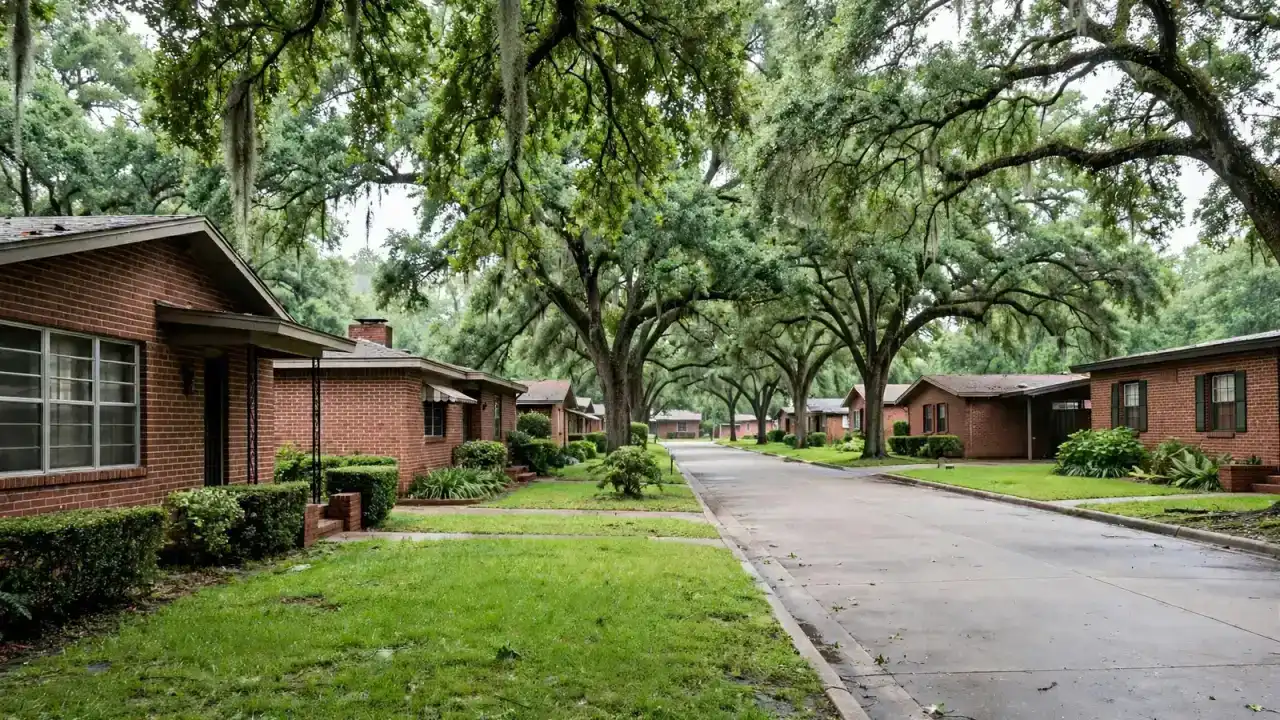
Clear Lake City grew on former ranch land after NASA chose the area for its Manned Spacecraft Center, now Johnson Space Center. [5] Builders opened the community in 1963 and kept building through the 1980s. Houses are mostly one- and two-story slab homes with brick veneer and wood framing, attached garages, wooden fences and, near the water, decks and docks. Houston annexed most of the community in 1977.
Clear Lake termite risks
What termite professionals see in Clear Lake
Common findings in Clear Lake include these.
Fences and decks
Wood touching soil near the house.
Read moreSlab penetrations
Plumbing and cracks in older slabs.
Read moreHumid bay air
Moist conditions much of the year.
Read morePossible drywood activity
Pellets in attics, trim or furniture.
Read more
Bay humidity
Humidity and the bay
Being near Galveston Bay means humid air, frequent rain and soils that stay damp. Subterranean and Formosan termites thrive in those conditions. Drywood termites, which live inside wood without soil contact, are also more common along the coast. [2] Identifying which termite is present matters, because treatments differ.
Clear Lake figure

Fences and decks
Wooden fences, decks and docks
Wooden fences attached to the house give termites a bridge from soil to walls. Decks built at ground level hide damp soil under them. Docks and bulkheads near canals and the lake stay wet. Inspectors check where fences meet the house and look under decks where possible.
Storms
Storms and flooding
Coastal storms bring wind, rain and sometimes flooding. Roof damage can let water into attics, which Formosan termites can use to build nests above ground. Flooded homes have wet framing. After a storm, check for leaks and consider an inspection.
Drywood termites
Drywood termites in Clear Lake
Drywood termites can infest attics, window frames, trim and wooden furniture. Their small, hard pellets are the main sign. Treatment may be localized, injecting the infested wood, or whole-structure fumigation for widespread infestations. The professional explains which applies.
Treatment options
Treatment options for Clear Lake homes
For subterranean and Formosan termites, liquid treatment along slabs and patios or bait stations around the perimeter are common. Drywood termites need wood treatment or fumigation. Many homes benefit from regular inspections given the climate.
Planning a Clear Lake visit
Planning a termite visit in Clear Lake
- 1
Fences and decks
Note where they touch the house.
- 2
Attic
Clear access to the attic.
- 3
Pellets
Save any pellets you found.
- 4
Storm history
Mention leaks or flooding.
- 5
Swarm details
Note when swarmers appeared.
Clear Lake situations
Clear Lake termite situations and typical responses
| Situation | Typical response |
|---|---|
| Tubes where a fence meets the house | Treat and separate fence |
| Pellets in the attic | Drywood inspection |
| Swarmers at dusk | Inspection; Formosan likely |
| Roof leak after a storm | Fix leak; check attic |
| Deck at ground level | Inspect beneath; treat soil |
NASA and growth
Growth alongside NASA
When NASA chose the Clear Lake area for its Manned Spacecraft Center in the early 1960s, demand for housing soared. Humble Oil, which owned much of the land, partnered on Clear Lake City, which opened in 1963. Engineers and scientists filled new subdivisions through the following decades. Houston annexed most of the area in 1977 despite local opposition. The homes from those decades now range from forty to sixty years old.
Signs Clear Lake owners notice
Signs Clear Lake owners notice first
Clear Lake owners commonly notice swarmers in spring evenings around lights, mud tubes on slab edges behind shrubs, and damage to wooden fences and decks. Near the water, some find pellets under trim or furniture, a sign of drywood termites. After storms, owners may find damp areas in attics where termites could take hold.
Lake and canal homes
Homes on the lake and canals
Homes along Clear Lake and canals have bulkheads, docks, boathouses and decks that stay damp. Wood in these structures is attractive to termites. Inspections can include these structures if requested. Using treated lumber and keeping wood off soil help protect them.
Slab homes from the sixties and seventies
Slab homes from the 1960s and 1970s
Most Clear Lake homes are on slabs built in the 1960s and 1970s. After decades of soil movement, cracks are common. Bathrooms with bath traps and plumbing penetrations are typical entry points. Inspections focus on wet rooms, the garage and the slab edge.
Drywood termites near the coast
Drywood termites near the coast
Drywood termites are more common in coastal areas. They can arrive in infested furniture or wood and establish in attics, window frames and trim. Pellets are the key sign. Localized treatments or fumigation are used depending on extent. An inspection identifies whether drywood termites are present.
Storm preparation
Preparing for storm season
Before hurricane season, check gutters, roof flashing and attic vents to prevent leaks. After storms, inspect the attic for water and the yard for debris against the house. Remove fallen wood promptly.
Salt air and wood
Salt air, humidity and outdoor wood
Humid, salty air near the bay ages paint and wood faster. Peeling paint lets moisture into siding and trim, and wet wood attracts termites. Keeping exterior wood painted and sealed helps protect it.
Neighborhood associations
Associations and common areas
Many Clear Lake neighborhoods have associations that manage common areas, fences and landscaping. Wooden fences and structures in common areas can harbor termites near homes. Report activity in common areas to the association.
During a swarm
What to do when swarmers appear in a Clear Lake home
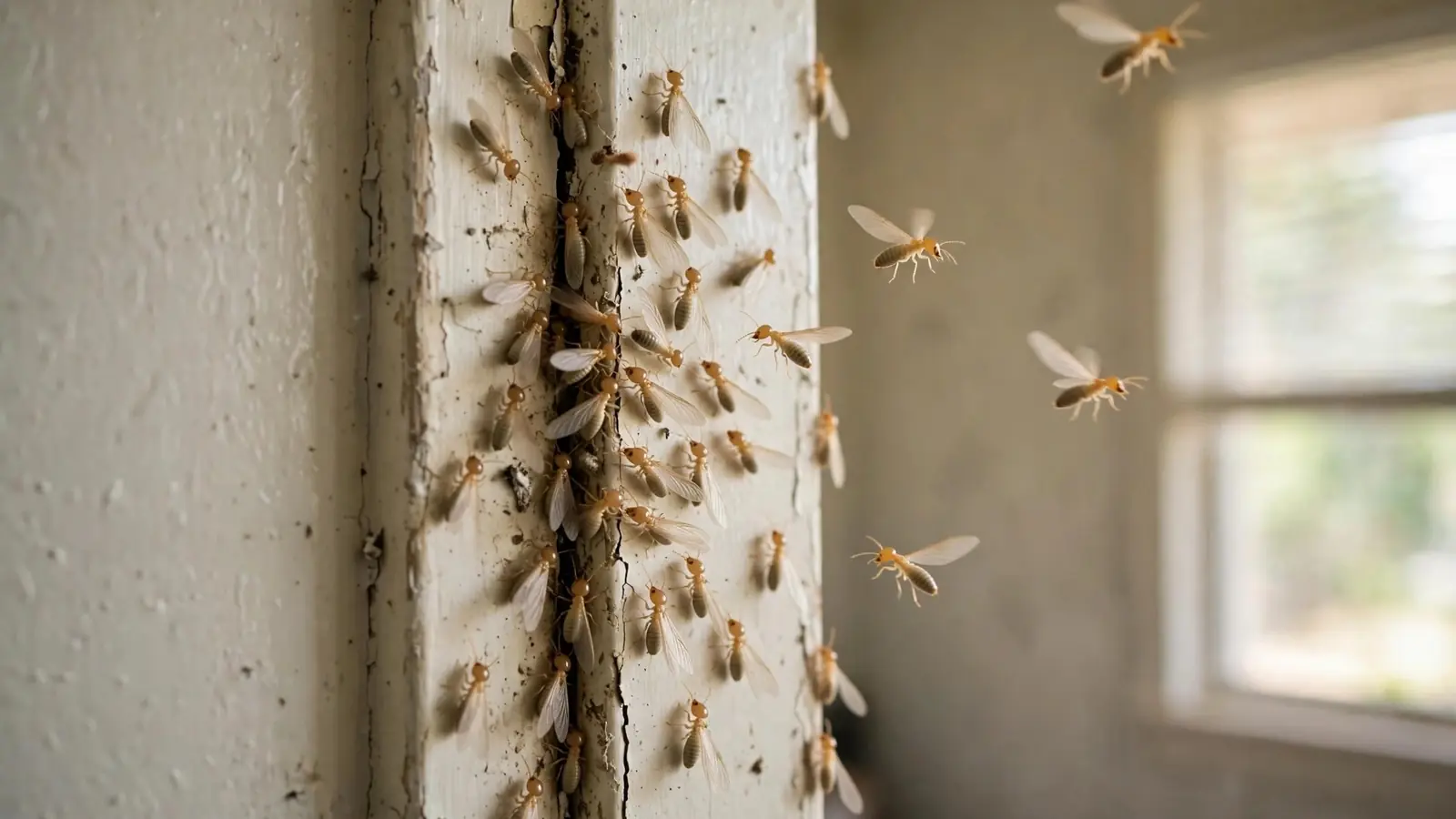
On humid evenings, Formosan swarmers can cover lit windows near the bay. Turn off outside lights, close blinds and vacuum any that get in. If swarmers emerge inside from a wall or ceiling, close the room and save samples. If you see pellets rather than swarmers, save those too, since they point to drywood termites. Then call.
Treatment day in Clear Lake
What treatment day looks like in Clear Lake
For subterranean or Formosan termites, crews trench along slab edges, drill patios and driveways, and treat bath traps, or install bait stations around the perimeter. For drywood termites, they may inject infested wood or plan fumigation. Homes with decks and fences get extra attention where wood meets soil or the house.
Choosing who to call
Choosing a termite professional in Clear Lake
Ask whether they inspect for drywood as well as subterranean termites, how they handle decks, fences and docks, and what they recommend after storms. Get license numbers and a written plan.
Records after storms
Keeping records after storms
After a storm, document roof leaks, flooding and repairs alongside termite records. If termites appear later, the history helps the professional understand where moisture entered.
Prevention habits
Everyday habits for Clear Lake homes
Keep a gap between wooden fences and the house. Use treated lumber and keep deck framing off the soil. Clean gutters before storm season. Keep mulch thin and below the slab edge. Check the attic after storms. Inspect used wooden furniture for pellets before bringing it inside. Keep exterior wood painted.
Insurance in Clear Lake
Insurance, storms and termites
Policies usually exclude termite damage, even after storm-related leaks. Document storm repairs separately. Ask whether framing was inspected for termites when walls or roofs were repaired.
Seasons in Clear Lake
A year of termite awareness near the bay
Spring brings native and Formosan swarms. Summer and fall bring hurricane season with storms and potential flooding. Drywood activity can appear year-round. Scheduling inspections in late winter and after major storms keeps protection current.
Bay Area communities
Neighboring Bay Area communities
Clear Lake borders several smaller cities and communities around the lake and bay. Termite pressure is similar across the area. Coverage on this line follows the network's Houston ZIP codes, so confirm your address on the call.
Pool decks and patios
Pool decks and large patios
Many Clear Lake homes have pools with decks and large patios against the house. These cover soil next to the foundation. Liquid treatment requires drilling them; bait stations can go in beds and soil at their edges. Ask which suits your layout.
Slab home anatomy
How termites move through a Clear Lake slab home
In a typical Clear Lake slab home, subterranean and Formosan termites come up through slab cracks, plumbing penetrations, bath traps and the garage expansion joint, then into bottom plates and studs behind brick veneer. Wooden fences attached to the house give another route. Drywood termites, by contrast, may enter through attic vents or arrive in furniture and settle in roof framing, trim or window frames without any soil contact.
Restoring after treatment
Repairs after termites in Clear Lake
After treatment, repairs may include replacing bottom plates, trim and window frames. Decks and fences may need posts and rails replaced with treated lumber. Drywood damage in attics or trim is repaired after the infestation is treated.
Decks and docks
Building decks and docks to resist termites
When building or rebuilding decks and docks, use treated lumber rated for ground or water contact, set posts on concrete where possible and keep framing off the soil. Leave access to inspect beneath decks. These choices reduce both termite and decay risk in the humid bay climate.
Attic inspections
Attic checks in Clear Lake homes
Attics are where storm leaks and drywood termites often show up. Check for water stains, damp insulation and small piles of pellets on attic floors or insulation. If you are not comfortable in the attic, ask the inspector to include it.
Talk to a local contractor
Questions about clear lake?
One call connects you with an independent termite treatment contractor who serves Houston.
Room by room
A room-by-room check for Clear Lake owners
Start in bathrooms near tubs and any bath trap panel. Check baseboards and window frames on exterior walls. Look for pellets under trim, furniture and in window sills. In the garage, clear walls and check the expansion joint. In the attic, look for stains, damp insulation and pellets. Outside, check where fences meet the house and under decks.
Myths in Clear Lake
Common beliefs about termites in Clear Lake
Some owners think salt air keeps termites away. Humidity near the bay actually favors them. Others believe brick homes are safe. Termites travel behind brick veneer to the wood frame. A third belief is that drywood termites only affect old houses. They can infest any house, often arriving in furniture or wood.
Questions on the call
Questions to ask on a Clear Lake call
Ask whether the professional inspects for drywood as well as subterranean termites, includes attics, and handles decks and fences. Ask what they recommend after storms. Get license numbers and a written plan.
Living near Johnson Space Center
Living near the space center
Neighborhoods near Johnson Space Center include a mix of original homes and newer construction. Builders working in the area pretreat new homes, but older homes nearby may have established colonies. Regular inspections suit the mix.
Moving in
First steps after buying in Clear Lake
After buying in Clear Lake, check the attic for leaks and pellets, look at where fences meet the house and inspect under decks. Read the sale termite report and ask for treatment records. Plan an inspection before spring and after the first major storm.
Weep holes and brick
Brick veneer and weep holes in Clear Lake
Many Clear Lake homes have brick veneer with weep holes near the bottom. Soil and mulch piled against the brick block the holes and hide termite entry. Keep the ledge and weep holes visible.
Garage conversions
Garage conversions and additions
Some Clear Lake homes have converted garages or added rooms. The joint between the original slab and new construction, and any new framing on old slabs, can create entry points. Ask the inspector to check these areas.
Older plumbing
Plumbing under older slabs
Homes from the 1960s and 1970s may have aging drain lines under the slab. Leaks keep soil damp beneath the house. If a slab leak is repaired, ask whether termite treatment should be redone in that area.
Fences in detail
Fence details worth checking
Clear Lake's wooden privacy fences often run from the back corners of houses. Check where fence rails or posts touch the house, posts at ground level and gates hanging from the house. Separating the fence from the wall with a small gap or metal bracket breaks the termite route.
Low-lying areas
Low-lying areas near the bay
Some Clear Lake neighborhoods sit low near the lake and bayous. After heavy rains or surge, soil can stay saturated. Drainage improvements and watching for pooled water near foundations reduce termite pressure.
Neighborhood pools and parks
Community parks and greenbelts
Clear Lake has greenbelts, parks and community pools with wooden structures and mature trees. Colonies in those areas can forage toward nearby homes. Owners backing onto greenbelts should keep an eye on fence lines and the slab edge facing the greenbelt.
Spring checklist
A simple spring checklist for Clear Lake owners
Each spring, check the slab edge, brick ledge and weep holes. Look at where fences meet the house and under decks. Check the attic for leaks and pellets. Clear gutters before storm season. Watch for swarms around lights on humid evenings. Call if you find signs.
Second stories
Two-story homes in Clear Lake
Many later Clear Lake homes have second stories, with plumbing running from upstairs bathrooms through walls to the slab. Leaks in those lines can wet walls and attract termites. Damage may show first on the ground floor beneath an upstairs bathroom.
Windows and sliding doors
Sliding doors and window frames
Sliding glass doors and wooden window frames on the back of Clear Lake homes face rain and splash from patios. Frames can soften and attract both termites and rot. Check them during spring walks and keep caulking intact.
Used furniture and drywood
Bringing in used wooden furniture
Drywood termites often travel in infested wooden furniture. Before bringing used dressers, tables or chests into a Clear Lake home, look for small holes and pellets underneath. If you find them, leave the piece outside and ask a professional.
Clear Lake garages
Attached garages in Clear Lake homes
Attached garages are where many Clear Lake homes first show tubes, at the expansion joint or behind stored items. Keep garage walls clear and check the base of walls during spring walks.
Irrigation in Clear Lake
Sprinklers aimed at walls
In-ground sprinklers that spray onto brick and foundations keep soil and wood wet. Adjust heads so water lands on lawns and beds, not walls.
Storm debris
Storm debris against the house
After storms, branches and debris often pile against fences and walls. Clear them promptly so they do not feed termites or hold moisture against the house.
Common areas and HOAs
HOA landscaping near homes
Association landscapers often maintain beds and trees along common walls and entries. Mulch piled against shared fences or homes near common areas can hide tubes. Ask the association to keep mulch thin near structures.
Fireplaces
Fireplaces and chases in Clear Lake homes
Many 1970s homes have wood-framed fireplace chases on exterior walls. The base of the chase meets the slab and soil outside, and leaks around the chimney cap can wet the framing above. Check the base of the chase and the attic around the chimney.
Bay humidity indoors
Indoor humidity and air conditioning
Humid bay air keeps indoor wood damp if air conditioning is not running well. Leaking AC drain pans in attics also wet framing. Keep drain lines clear and pans dry.
Clear Lake garden sheds
Backyard sheds near fences
Backyard sheds on wooden skids often sit against fences in Clear Lake yards. Termites in a shed can travel along the fence to the house. Set sheds on blocks, keep them away from fences and include them in inspections.
Clear Lake playsets
Wooden playsets and treehouses
Wooden playsets and treehouses in back yards sit on soil under trees. Use treated lumber, keep them away from fences and the house, and check their posts during spring walks.
Patio covers
Patio covers attached to the house
Wooden patio covers bolted to the house have posts on the patio or soil. Termites climbing the posts can reach the wall. Check post bases and use metal brackets to keep wood off concrete and soil.
Clear Lake rentals
Rental homes in Clear Lake
Clear Lake has many rental homes near NASA and the universities. Landlords should schedule inspections and ask tenants to report swarmers, pellets or soft floors promptly.
Clear Lake soffits
Soffits and eaves near the water
Wooden soffits and fascia take salty, humid air and wind-driven rain. Peeling paint lets moisture in, softening wood that drywood termites and rot can exploit. Keep soffits painted and check for small holes or pellets below them.
Clear Lake boat storage
Boat storage and wooden racks
Wooden boat racks, kayak stands and dock boxes stored near the house stay damp and can host termites. Keep them off the soil and away from the walls.
Clear Lake planters
Planter boxes along walls
Wooden planter boxes built against brick walls hold damp soil above the slab edge, hiding tubes. Move them a short distance away from the house.
More Clear Lake questions
More questions Clear Lake owners ask
Can drywood termites come in with furniture?
Yes. Check used wooden furniture for pellets before bringing it home.
Should my dock be inspected?
Ask; docks and bulkheads stay damp and can host termites.
Do salt air and humidity affect treatment?
They keep wood damp, which makes prevention more important.
Is fumigation common here?
It is used for widespread drywood infestations.
Clear Lake termite questions
Questions about termites in Clear Lake
Are drywood termites a concern in Clear Lake?
They are more common near the coast. Pellets are the main sign.
Should my fence touch my house?
Ideally not, since it gives termites a path to the walls.
Can storms cause termite problems?
Leaks and flooding create damp wood that termites favor.
Do bait stations work here?
Yes, for subterranean and Formosan termites, not drywood.
What should I tell the professional?
Fences, decks, storm history and what signs you found.